European truck makers brace for wave of low-cost Chinese rivals
By Axel Miller | 10 Mar 2026
Summary
European heavy-duty truck makers are preparing for intensified competition as Chinese electric truck manufacturers such as BYD, Farizon (Geely), and Windrose begin expanding into Europe in 2026, bringing lower prices and strong performance specs that challenge local incumbents.
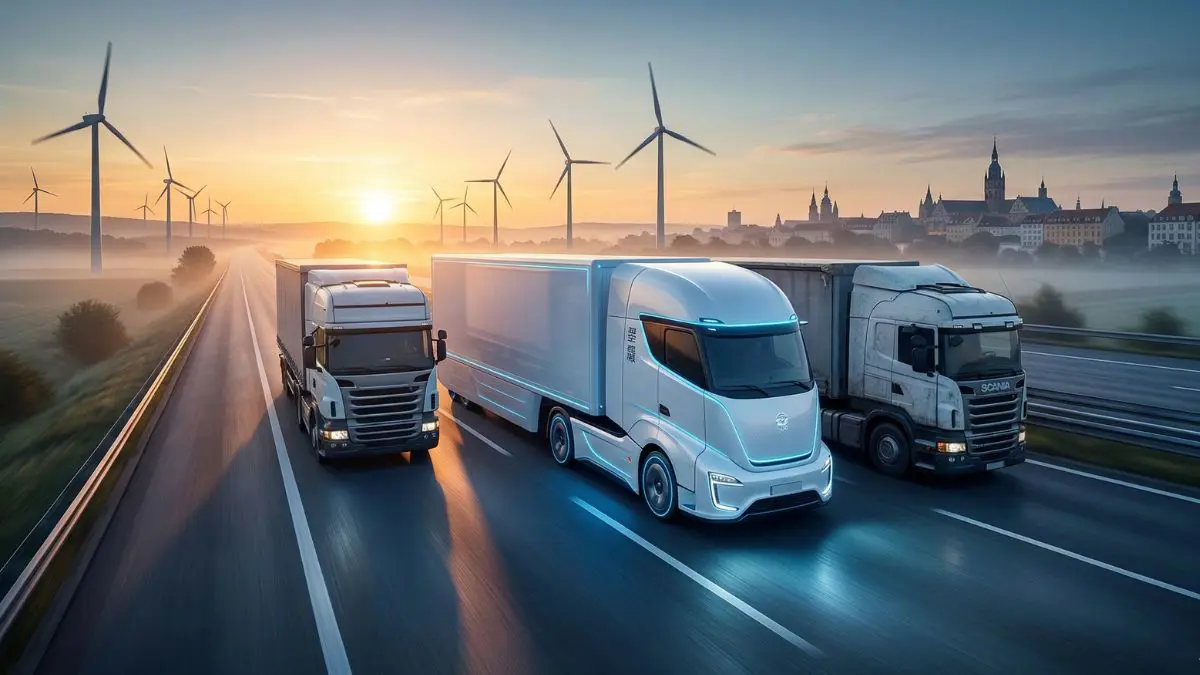
ANTWERP/SODERTALJE, Sweden, March 10, 2026 — Europe’s heavy-duty truck sector is bracing for a surge of competition as Chinese electric truck makers enter the region, mirroring the earlier disruption seen in the passenger EV market.
More than half a dozen Chinese manufacturers — including BYD, Geely’s Farizon, Windrose, and SuperPanther — are preparing to launch or scale European sales this year, putting pressure on established brands such as Volvo Group, Daimler Truck and Scania.
Industry executives say the newcomers are competing not only on price but also on range, charging performance and manufacturing speed.
The 30% price gap
Chinese manufacturers are targeting prices of roughly €225,000–€250,000 per vehicle, compared with about €320,000 for many European electric heavy trucks.
Analysts attribute the gap largely to China’s domestic scale — where zero-emission heavy trucks account for roughly 29% of sales — and a deeply integrated battery supply chain.
While EU electric truck adoption is growing, from 2.3% of sales in 2024 to 4.2% in 2025, uptake remains constrained by high upfront costs.
Technology pressure builds
Executives and fleet operators say Chinese offerings also stand out on performance.
For example, Windrose’s Global E700 offers around 670 km (416 miles) of range with charging times near 35 minutes under optimal conditions — metrics logistics firms say exceed many current European models.
“China’s competitive advantage is their technology is about three years ahead of Europe’s”, said Filip de Clercq, CEO of Belgian logistics firm Gilbert de Clercq.
Industry pushes for policy support
European manufacturers and industry groups including ACEA are urging policymakers to support domestic production through:
- Lower highway tolls for zero-emission trucks
- Electrification mandates for large freight fleets
- Incentives tied to European manufacturing
“We have one or two years to get ahead of this,” said Chris Heron, secretary general of E‑Mobility Europe.
Learning from China
Some European firms are also adjusting strategy.
Scania recently committed about €2 billion to a plant near Shanghai, aiming to benefit from faster development cycles and manufacturing efficiencies.
CEO Christian Levin said scaling production quickly is a key strength of Chinese competitors.
Why this matters
- Green transition pace: Lower prices could accelerate electrification of Europe’s freight sector.
- Industrial competitiveness: European makers risk losing share in a strategically vital industry.
- Supply chain dynamics: Battery dominance gives Chinese firms structural cost advantages.
- Global ripple effects: Expansion beyond Europe may intensify competition with players like Tesla.
Frequently asked questions (FAQs)
Q1. Are Chinese trucks suited for European roads?
Yes. Models launching in Europe are designed to meet EU regulatory and operational standards.
Q2. How will they be serviced locally?
Companies such as Sany and SuperPanther have partnered with Alltrucks, which operates around 650 service centers across Europe.
Q3. Will tariffs be imposed?
EU policymakers are debating support mechanisms, but tariffs similar to those imposed on passenger EVs remain uncertain.

























