Ashok Leyland Sets Sights on Global Top 10 as It Opens New EV Plant in Uttar Pradesh
By Axel Miller | 09 Jan 2026
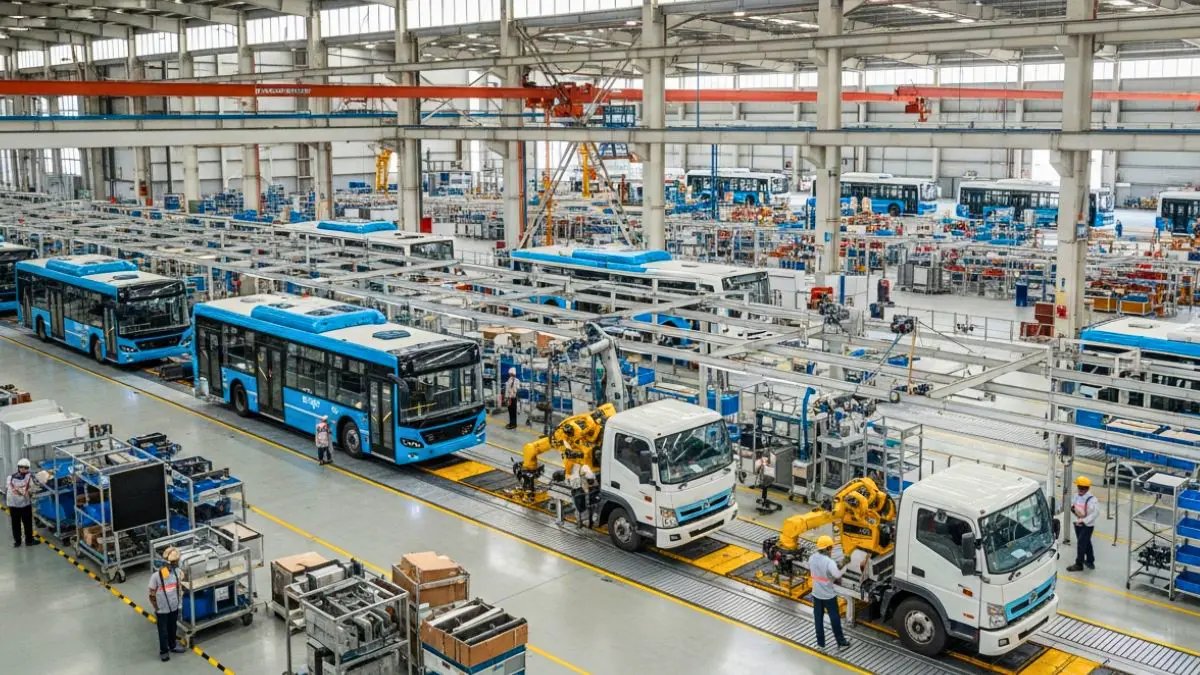
Ashok Leyland, the flagship commercial vehicle arm of the Hinduja Group, has outlined its ambition to enter the global top 10 commercial vehicle manufacturers, marking a key milestone with the inauguration of a new manufacturing facility in Uttar Pradesh on Friday.
The new plant, located in the Sarojini Nagar industrial area of Lucknow, was inaugurated in the presence of senior central and state leaders, including Rajnath Singh, Yogi Adityanath, Nitin Gadkari, and H. D. Kumaraswamy.
The facility represents Ashok Leyland’s latest investment in green mobility and advanced manufacturing, aligning closely with the government’s push to strengthen domestic production and accelerate the transition to cleaner transport.
Focus on green mobility and manufacturing scale
The Lucknow plant has been developed with a planned investment of around ₹1,000 crore and is designed to support the production of electric and alternative-fuel commercial vehicles. The facility will begin operations with an initial capacity of approximately 2,500 vehicles per year, with plans to scale up to about 5,000 units in the next phase, depending on market demand.
Hinduja Group Chairman Dheeraj Hinduja said the plant was completed in just 14 months from the issuance of the Letter of Intent, crediting the state government’s policy support and administrative responsiveness for the rapid execution. He described the project as a reflection of the group’s long-term commitment to India’s manufacturing and sustainability goals.
The plant has been designed with flexible production lines to accommodate future powertrain technologies, including electric and other alternative fuels, as the commercial vehicle market evolves.
Supporting national policy priorities
The new facility will support operations of Switch Mobility, Ashok Leyland’s electric mobility arm, strengthening the company’s capabilities in zero-emission buses and light commercial vehicles for domestic and export markets.
Built on the site of the former Scooters India facility, the project also signals industrial revitalisation in the region. Ashok Leyland said the plant is expected to strengthen the local MSME ecosystem and generate employment across the Lucknow–Kanpur industrial corridor.
Industry observers view the investment as aligned with the government’s broader objectives under initiatives such as Make in India, Atmanirbhar Bharat, and the National Electric Mobility Mission, particularly in public transport and freight electrification.
Summary
Ashok Leyland has inaugurated a new EV-focused manufacturing plant in Lucknow with a planned investment of around ₹1,000 crore. The facility, which starts with a capacity of 2,500 vehicles annually, underscores the company’s ambition to scale globally while aligning with national priorities on green mobility, domestic manufacturing, and industrial development in Uttar Pradesh.
Frequently Asked Questions (FAQs)
Q1: What is the capacity of the new Lucknow plant?
The plant will start with an initial capacity of about 2,500 vehicles per year, with plans to expand to around 5,000 units in a later phase.
Q2: Who inaugurated the facility?
The plant was inaugurated in the presence of senior central and state leaders, including Rajnath Singh, Yogi Adityanath, Nitin Gadkari, and H. D. Kumaraswamy.
Q3: What types of vehicles will be produced at the plant?
The facility is designed to manufacture electric and alternative-fuel commercial vehicles, with flexibility to adapt to future technologies.
Q4: How much has Ashok Leyland invested in the project?
The company has outlined a planned investment of approximately ₹1,000 crore, covering the initial setup and future expansion.
Q5: Why is the plant significant for Uttar Pradesh?
The project redevelops the former Scooters India site and is expected to support local MSMEs, create employment, and strengthen the state’s industrial ecosystem.
Q6: What is Ashok Leyland’s long-term goal?
The company has stated its ambition to enter the global top 10 commercial vehicle manufacturers by scaling capacity, exports, and green mobility offerings.

























