BrahMos successfully flight-tested with indigenous seeker
22 Mar 2018
1
BrahMos, the world’s fastest supersonic cruise missile, was successfully flight-tested with an indigenous seeker at 8.42 am on Thursday at the Pokhran test range in Rajasthan.
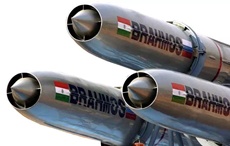 “The precision strike weapon with Indian-made seeker flew in its designated trajectory and hit the target with pin-point accuracy,” tweeted defence minister Nirmala Sitharaman.
The versatile missile can be fired from the land, fighter jets, ships and even submarines. The two-stage missile can achieve a cruise speed of 2.8 Mach and can carry a conventional warhead of 300 kg.
In what is also billed as a boost for the Make in India campaign of Prime Minister Narendra Modi, the seeker – a critical element for the missile – was developed in the country. The BrahMos system has been jointly developed by India and Russia.
Sitharaman said the missile hit its target with pinpoint accuracy and the launch will boost India’s national security. The missile is the heaviest to be deployed on the Sukhoi-30 fighter aircraft.
The BrahMos cruise missile was successfully test-fired for the first time in November 2017 from the IAF’s frontline fighter aircraft the Sukhoi-30MKI against a sea-based target in the Bay of Bengal (See: IAF successfully test-fires BrahMos missile from Sukhoi fighter jet).
The successful maiden test firing of the Air Launched Cruise Missile (ALCM) boosted the IAF’s air combat operations capability from stand-off ranges. It was the first time in the world that such a heavy missile was fitted on a fighter jet.
According to the defence ministry, the Brahmos ALCM weighing 2.5 ton is the heaviest weapon to be deployed on India’s Su-30 fighter aircraft modified by HAL to carry weapons.
The world-class weapon with multi-platform, multi-mission role is now capable of being launched from land, sea and air, completing the tactical cruise missile triad for India.
The cruise missile will be integrated on 40 Sukhoi combat aircraft meeting the needs of the IAF.
With India now a part of the Missile Technology Control Regime, it can extend the range of BrahMos missile from 300 km to 450 km. The India-Russia joint venture that is developing the missile plans to extend its range to 800 km.
The versatile missile can be fired from the land, fighter jets, ships and even submarines. The two-stage missile can achieve a cruise speed of 2.8 Mach and can carry a conventional warhead of 300 kg.
The missile developed by India and Russia takes its name from two rivers in the respective countries – Brahmaputra and Moskva.