Environment

At least 8 dead as cyclone Titli lashes Andhra, Odisha coasts
11 Oct 2018
The severe cyclonic storm has now crossed over from Andhra to Odisha where over three lakh people from five coastal districts have been moved to safety

Act now or perish, says UN climate panel
08 Oct 2018
In order to limit global warming to 1.5°C by 2030, global emissions need to be cut by 45 per cent from 2010 levels, the IPCC report said, adding that since the landmark Paris Agreement adopted in December 2015, global warming has, in fact, gone up by 1°C
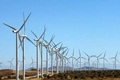
Large-scale wind power needs more land, causes more climatic impact than previously thought
05 Oct 2018
Researchers find that the transition to wind or solar power in the United States would warm average surface temperatures over the continental United States by 0.24 degrees Celsius

PM Modi conferred `Champion of Earth’ award
03 Oct 2018
UN Environment is recognising Indian Prime Minister Narendra Modi for his bold environmental leadership on the global stage and his pledge to eliminate all single-use plastics in the country by 2022

SoftBank’s Son offers free solar power after projects complete 25 years
03 Oct 2018
Son said while a solar power plant has a total life span of 80 years, its capacity lowers by 15 per cent in the first five years, but generation is maintained at 85 per cent for the rest of its lifetime

UN honours PM Modi, France’s Macron with `Champions of Earth Award’
27 Sep 2018
Besides Modi and Macron, this year’s laureates include Cochin International Airport (for entrepreneurial vision), Joan Carling (defenders), Beyond Meat and Impossible Foods (science and innovation) and China's Zhejiang's Green Rural Revival Programme (inspiration and action)

IMD sounds alert as rain wreaks havoc in North, kill 11
26 Sep 2018
IMD has forecast very heavy rainfall over Arunachal Pradesh, Assam, Meghalaya, Himachal Pradesh, Uttarakhand, Haryana, Chandigarh, Delhi, Uttar Pradesh, and heavy rainfall over Andaman and Nicobar Islands, Punjab, Rajasthan, West Bengal, Sikkim, Karnataka, Kerala and Tamil Nadu
Climate change may drive 10% of amphibian species in the Atlantic Rainforest to extinction
14 Sep 2018

New research could reduce primate electrocutions and help conservation strategies
10 Sep 2018
Electrocution threatens a wide range of primate species across the world and the hazard could become more widespread as species are increasingly restricted to human-dominated landscapes

Latest articles









Featured articles

The decoupling paradox: Why Wall Street keeps funding AI despite $100 oil
By Axel Miller | 11 May 2026
AI infrastructure stocks continue rallying despite $100 oil as investors bet on productivity gains and semiconductor demand in 2026.

Hybrid bonding gains attention as AI chip packaging demand grows
By Cygnus | 23 Apr 2026
Hybrid bonding is driving AI chip packaging demand as backend technologies gain importance in the semiconductor supply chain.

The agentic transition: how enterprises are scaling AI from pilot to profit
By Cygnus | 22 Apr 2026
AI has entered its execution era. Discover how companies like Valeo and Microsoft are scaling agentic AI systems—from copilots to autonomous workflows driving real business impact.

Post-splashdown: What Artemis II taught us about the ‘deep space wall’
By Axel Miller | 15 Apr 2026
Artemis II splashdown marks a breakthrough in deep space exploration. Discover AVATAR radiation data, Orion’s distance record, and insights shaping NASA’s 2028 Moon mission.

Can aviation go green? The multi-billion dollar race for sustainable fuel
By Cygnus | 10 Apr 2026
Airlines are racing to adopt sustainable aviation fuel, but limited supply and high costs challenge the future of green aviation.

The battery race: who will control the future of electric vehicles?
By Axel Miller | 08 Apr 2026
The global battery race is reshaping the electric vehicle industry, with China, the US, and Europe competing for control over supply chains and technology.

AI vs governments: Who controls the future of intelligence?
By Cygnus | 07 Apr 2026
Governments and AI companies like OpenAI and Anthropic are shaping the future of intelligence amid rising policy conflicts and global competition.

Strait of Hormuz: how one chokepoint controls the global economy
By Axel Miller | 06 Apr 2026
The Strait of Hormuz is a critical global chokepoint. Learn how disruptions impact oil prices, shipping, and the global economy.

The $2 trillion AI infrastructure race: Who will control global compute?
By Cygnus | 06 Apr 2026
AI spending is set to exceed $2 trillion in 2026, driving a global race in data centers, chips, and energy infrastructure.






