India Expands Power Capacity Pipeline as Non-Fossil Share Rises: Central Electricity Authority
By Axel Miller | 09 Apr 2026
Summary
- India has a large pipeline of power generation capacity under construction, with a significant share focused on renewable energy.
- The Central Electricity Authority projects a steady rise in the share of non-fossil fuel capacity over the next decade.
- Electricity demand is expected to grow strongly, driven by industrial expansion, electrification, and emerging sectors such as electric mobility.
NEW DELHI, April 9, 2026 — India is accelerating capacity addition across its power sector, with a strong focus on renewable energy and grid reliability, according to recent projections and planning documents from the Central Electricity Authority (CEA).
Expanding Capacity Pipeline
The country currently has a substantial volume of power generation capacity under construction across thermal, hydro, and renewable segments. A significant portion of this pipeline is concentrated in solar, wind, and hydro projects, reflecting India’s long-term strategy to diversify its energy mix.
This expansion is aligned with India’s broader target of increasing non-fossil fuel-based capacity, which already accounts for a growing share of total installed power capacity.
Rising Role of Clean Energy
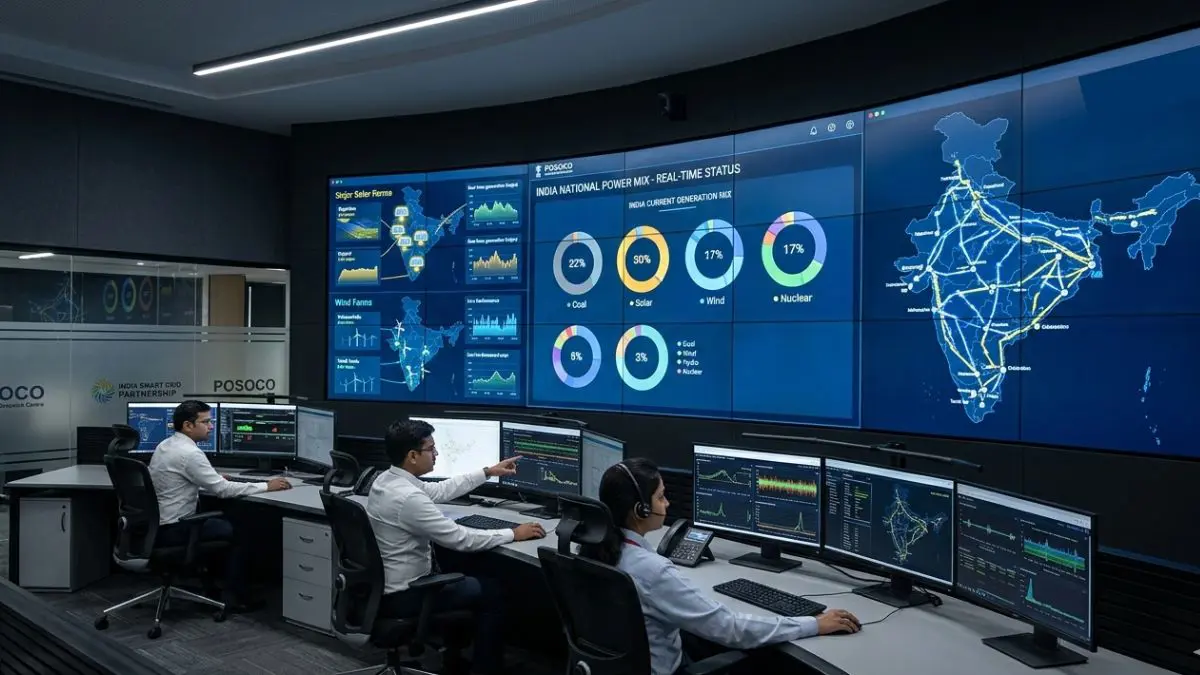
CEA projections indicate that non-fossil sources—including solar, wind, hydro, and nuclear—are expected to contribute an increasingly dominant share of installed capacity over the next decade.
Solar energy, in particular, is expected to remain a key driver of capacity addition, supported by policy incentives, falling costs, and large-scale project development across multiple states.
Storage and Grid Stability
As renewable penetration rises, the focus is shifting toward energy storage and grid balancing solutions.
Technologies such as pumped storage and battery energy storage systems (BESS) are being developed to address intermittency challenges and ensure round-the-clock power availability. Policymakers and planners have emphasized that storage capacity will play a critical role in integrating higher shares of renewable energy into the grid.
Demand Growth Outlook
India’s electricity demand is projected to grow steadily over the coming decade, supported by economic expansion, increased electrification, and the rise of new energy-intensive sectors such as data centers and electric vehicles.
This demand outlook underscores the need for continued investment in both generation capacity and transmission infrastructure to maintain grid reliability.
Continued Role of Conventional Power
Despite the rapid growth of renewables, conventional sources such as coal are expected to remain an important part of the energy mix in the near to medium term.
Thermal power continues to provide baseload support, helping ensure grid stability during periods when renewable generation is low.
Why this matters
- Energy Transition: India is steadily increasing its reliance on non-fossil energy sources.
- Grid Reliability: Storage and thermal backup remain essential for managing renewable variability.
- Demand Surge: Rapid growth in electricity consumption will require sustained infrastructure investment.
FAQs
Q1. Is India focusing only on renewable energy?
No. While renewable energy is expanding तेजी, conventional power sources continue to support grid stability.
Q2. Why is energy storage important?
Storage helps manage the variability of solar and wind power by storing excess energy and supplying it when needed.
Q3. What is driving electricity demand growth in India?
Economic growth, industrialization, electric mobility, and increased digital infrastructure are key drivers.