The Berlin–Delhi Axis: Submarines, Semiconductors, and a Strategic Reset
By Cygnus | 08 Jan 2026
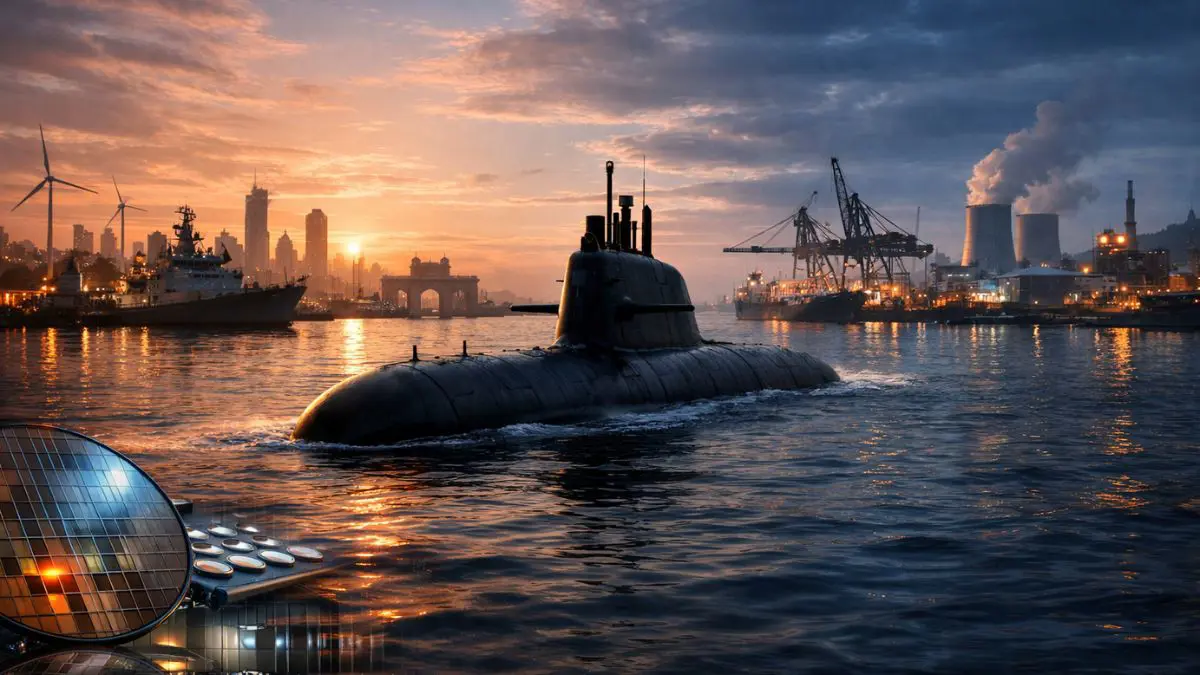
As German Chancellor Friedrich Merz prepares for his first high-profile visit to India on January 12–13, officials in New Delhi and Berlin are signalling a desire to recalibrate one of Europe’s most consequential Asian partnerships. The two-day engagement, spanning Ahmedabad and Bengaluru, is expected to focus on defence industrial cooperation, clean-energy trade, and advanced manufacturing—areas increasingly central to India’s long-term strategic planning.
While no formal announcements have yet been issued, officials on both sides describe the visit as an effort to accelerate stalled negotiations on Project 75-I, India’s next-generation conventional submarine programme, while broadening cooperation into green hydrogen and semiconductors. Taken together, the agenda reflects a wider shift: India is no longer positioning itself solely as an end-market for European technology, but as a co-developer and manufacturing partner in sectors likely to define the 2030s.
Project 75-I: Advancing a Long-Delayed Programme
At the centre of the defence discussions are advanced negotiations under Project 75-I, a programme aimed at inducting six new conventional submarines for the Indian Navy. Germany’s ThyssenKrupp Marine Systems (TKMS) is widely regarded as one of the leading contenders, in partnership with Mumbai-based Mazagon Dock Shipbuilders Limited (MDL).
Industry estimates place the potential contract value at around $8 billion (₹70,000 crore), though officials stress that final pricing, configuration, and timelines remain subject to negotiation. If concluded, the programme would involve construction of all six submarines in India, alongside a substantial transfer of technology and know-how.
Defence analysts note that the platform under consideration—Germany’s Type 214 design—features fuel-cell-based Air-Independent Propulsion (AIP), a technology that allows submarines to operate submerged for extended periods under certain conditions, while significantly reducing acoustic signatures compared to earlier generations.
Analysis: Closing the Undersea Capability Gap
The urgency surrounding Project 75-I is shaped by regional naval developments. Pakistan is in the process of inducting Chinese-designed Hangor-class submarines, based on the Type 039 family, prompting concerns within India’s maritime security establishment about a widening undersea capability gap.
Based on open-source assessments and analyst estimates, key differences often cited include propulsion architecture and endurance profiles:
| Feature | Type 214 (Projected P-75I Option) | Type 039C (Hangor Class) |
|---|---|---|
| AIP System | Fuel-cell (electro-chemical) | Stirling engine (mechanical) |
| Submerged Endurance | Extended (weeks, mission-dependent) | Shorter duration |
| Acoustic Signature | Very low under optimal conditions | Higher due to mechanical components |
Naval experts caution that real-world performance depends heavily on operating doctrine and crew proficiency, but agree that fuel-cell AIP systems offer inherent advantages in stealth-centric operations.
Beyond Defence: Hydrogen and Silicon
The Merz visit is also expected to push cooperation beyond military hardware.
- Green Hydrogen: Building on the Indo-German Green Hydrogen Roadmap unveiled in 2024, officials are expected to discuss early steps toward a “green shipping corridor,” potentially involving ammonia bunkering infrastructure at Indian ports. German firms specialising in electrolyser technology see India as a natural production base.
- Semiconductors: In Bengaluru, the German delegation—expected to include senior executives from automotive and industrial-electronics firms—is likely to explore partnerships in specialised semiconductor manufacturing. With Germany facing elevated energy costs and India actively promoting domestic chip fabrication, both sides see scope for complementary collaboration.
Conclusion: A Calculated European Pivot
The timing of the visit is notable, coming weeks ahead of a scheduled India–EU trade engagement later in January. By deepening cooperation with Germany—the bloc’s largest economy—New Delhi is signalling a gradual diversification of strategic dependencies, reducing reliance on legacy defence suppliers while building industrial resilience in critical technologies.
For Berlin, the outreach reflects a recognition that long-term competitiveness in defence, energy, and manufacturing will increasingly depend on partnerships beyond Europe.
Summary
India and Germany are seeking to deepen strategic ties as negotiations under Project 75-I advance toward a potential multi-billion-dollar submarine programme involving domestic construction and technology transfer.14 Alongside defence, discussions during Chancellor Friedrich Merz’s January visit are expected to cover green hydrogen infrastructure and semiconductor collaboration, pointing to a broader recalibration of India–Europe economic and security cooperation in 2026.
Frequently Asked Questions (FAQs)
Q1: Is the $8 billion submarine deal finalised?
No. Project 75-I remains under negotiation. While estimates place the programme near $8 billion, no contract has been formally signed.
Q2: Why is fuel-cell AIP considered important?
Fuel-cell AIP systems generate electricity electro-chemically with minimal moving parts, resulting in lower acoustic signatures compared to mechanical Stirling engines.
Q3: Where would the submarines be built?
Current proposals envisage construction at Mazagon Dock Shipbuilders Limited in Mumbai.

























