The Battle for the Skies: Air India’s Widebody Bet vs IndiGo’s XLR Gambit
By Cygnus | 12 Jan 2026
For much of the past decade, Indian aviation looked like a predictable equation: IndiGo dominated the domestic market through ruthless efficiency, while Air India remained a major international brand but relied heavily on state support and legacy route advantages.
In 2026, that equation is being reshaped. Air India’s post-privatisation rebuild has begun moving from internal restructuring to visible fleet modernisation, while IndiGo is expanding its ambitions beyond short-haul scale into longer-range international markets.
As Air India begins inducting its first post-privatisation “line-fit” Boeing 787-9 Dreamliners, a clash of philosophies is unfolding above the busiest routes. This is no longer just a contest for market share—it is a battle of business models, fleet strategy, and long-haul economics.
On one side is Tata-backed Air India, betting heavily on a classic hub-and-spoke approach powered by widebody aircraft to target premium travellers and non-stop intercontinental connectivity.
On the other is IndiGo, using long-range narrowbody aircraft—most notably the Airbus A321XLR—as a disruptive tool. Instead of building a long-haul strategy around massive widebodies, IndiGo is attempting to make medium-long direct flying viable at scale, opening thinner international routes where widebodies often struggle to consistently fill seats.
Air India: the premium fortress
Air India’s approach is built around yield: the value of premium passengers, premium cabins, and premium non-stop travel time.
By deploying true widebody aircraft with long-range capability and premium products such as lie-flat business class seats, Air India is pursuing high-spending corporate travellers and long-haul passengers who prioritise comfort, reliability, and time saved through direct routes.
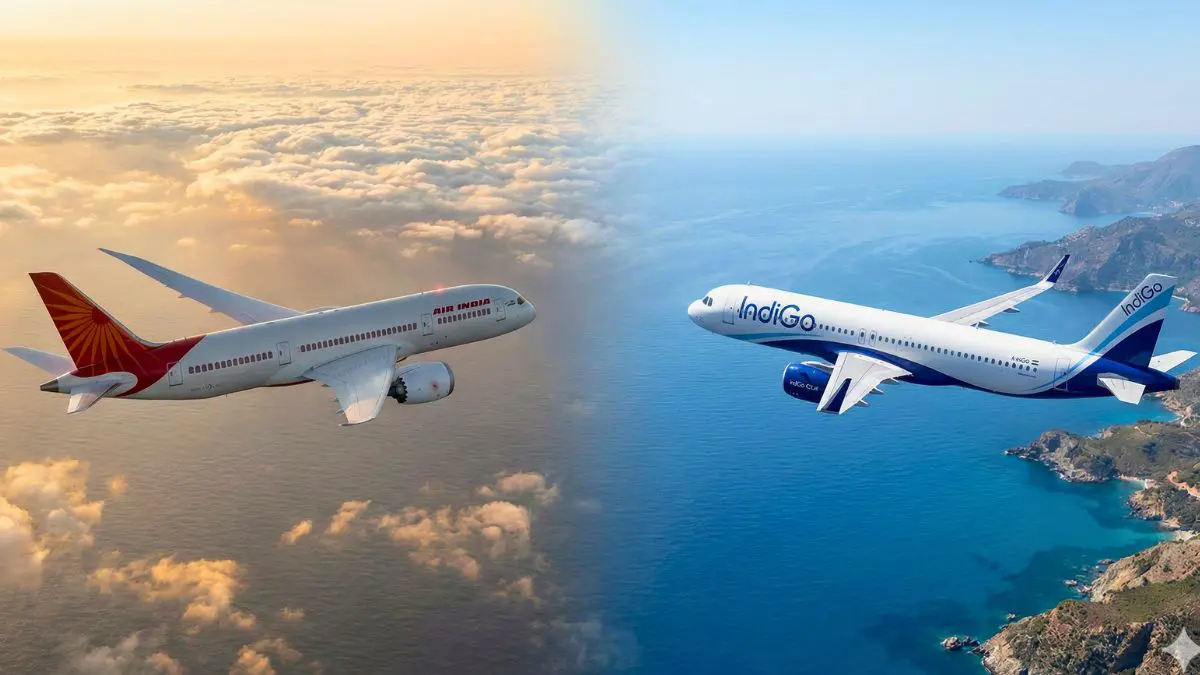
With its first line-fit 787-9 deliveries now underway, Air India can more credibly offer a hard product that aligns with global standards—critical for rebuilding trust with international premium flyers.
“Air India isn’t just selling a seat; it’s selling time, comfort, and direct access,” one aviation industry analyst said. “A long-haul non-stop flight with a consistent premium product is something narrowbody aircraft are not designed to replicate.”
IndiGo: the XLR disruptor
IndiGo is not trying to match Air India’s luxury. It is trying to reshape long-haul economics.
Its core bet is that the A321XLR’s fuel efficiency and range enable direct routes that were previously difficult to sustain profitably. A narrowbody XLR allows an airline to serve long international sectors with fewer seats and lower operating costs—reducing the risk of flying underfilled widebodies on routes with developing demand.
IndiGo has been signalling this direction for months: expanding directly into international markets where its scale, pricing discipline, and efficiency can be applied beyond India’s domestic corridors.
The airline is also evolving its product positioning. While remaining a low-cost carrier at heart, IndiGo has introduced a premium offering branded as IndiGoStretch, signalling its intent to capture higher-yield demand on longer sectors—especially where business travellers want speed and convenience but are price-sensitive.
The looming clash: 2027 and beyond
The rivalry is likely to intensify further beyond 2026.
Air India’s widebody renewal sets the stage for a renewed contest across ultra-long-haul corridors, where widebody economics and premium seating matter most. IndiGo, meanwhile, is building a pathway toward longer-haul competition through a narrowbody-first playbook—and has indicated ambitions to enter wider long-haul segments over time.
For passengers, the coming year could mark an unusual phase of upside: more direct routes, better aircraft, and a wider spectrum of product choices. Air India aims to reclaim the full-service long-haul experience, while IndiGo seeks to make efficient, direct international connectivity more accessible.
In a market as large as India, both models may succeed. But the winners will ultimately be determined by operational execution: reliability, consistency, and the ability to scale without disruption.
Summary
Air India and IndiGo are entering a new phase of competition defined by fleet strategy. Air India is betting on widebodies—starting with post-privatisation Boeing 787-9 Dreamliners—to reclaim premium long-haul passengers. IndiGo is taking a different route, using long-range narrowbodies like the Airbus A321XLR to disrupt long-haul economics while expanding premium options through IndiGoStretch. The rivalry will shape how Indian travellers fly internationally in the coming decade.
Frequently asked questions (FAQs)
Q1: What is the main difference between Air India and IndiGo’s strategies?
Air India is building a premium, widebody-driven hub-and-spoke model focused on long-haul comfort and high-yield travellers. IndiGo is pursuing efficiency-driven direct connectivity using long-range narrowbodies to keep costs low on thinner international routes.
Q2: What makes the Airbus A321XLR important?
The A321XLR (Extra Long Range) can fly longer distances with a narrowbody structure, enabling airlines to launch direct routes that may not support widebody aircraft profitably year-round.
Q3: Does IndiGo have a premium cabin product?
IndiGo has introduced a premium offering branded as IndiGoStretch, aimed at travellers seeking more comfort and priority service on longer routes.
Q4: Can IndiGo compete with Air India on ultra-long-haul routes?
Not directly with narrowbody aircraft. Ultra-long-haul flying is primarily a widebody domain because it requires larger aircraft with higher endurance, premium seating, and larger cargo capacity.
Q5: Which airline benefits passengers more in 2026?
Both. Air India strengthens the long-haul full-service experience, while IndiGo expands direct, efficient international connectivity. The net effect is more choice and improving standards across India’s aviation market.