The glacier whose iceberg sank the Titanic, set to disappear
04 Feb 2014
The glacier that spawned the iceberg that sank the Titanic, could itself disappear into the ocean before the century is through, a new study in the journal Cryosphere claims.
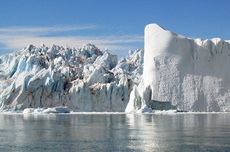 According to the study, the ice sheet's movement from Greenland's tundra into the sea has been gathering pace - an ominous development - as the glacier's movement into the sea would spawn a profusion of new icebergs and make a bigger addition to the Atlantic's rising sea levels than any glacier on record.
The glacier in question is the Jakobshavn Glacier, located in a sector of southwestern Greenland. It's ocean-facing end point is marked by a deep ocean fjord along the coast, also called its calving front. The calving front periodically releases ice masses that float off into the ocean as icebergs - the iceberg that doomed the Titanic back in 1912 was one of these.
Like most glaciers, the Jakobshavn Glacier loses ice every year during the warm months, with the thinning of ice, and as was also the case with many glaciers, that melting had intensified since the middle of the last century with global temperatures trending upwards.
The warming, though seems to have affected the Jakobshavn Glacier more than most and according to the Cryosphere study, this glacier was moving into the ocean recently at speeds of 10 kilometers a year, or 46 meters a day. At that rate, the glacier was officially the fastest-moving glacier on the planet, according to Ian Joughin, a University of Washington researcher and lead author of the study.
According to the researchers the glacier's flow rates were ''unprecedented'' as it appeared to be the fastest moving ice stream or glacier now on record. The researchers noted that the glacier speeded up in summer and slowed down in winter. According to their findings, at even the yearly average speed of the glacier it was moving at nearly four times the speed it was moving at 20 years ago.
At the speed, the glacier was adding more and more ice to the North Atlantic Ocean which contributed to raise the entire world's sea level by one millimeter from 2000 to 2010. The researchers estimated that with the recent increase in speed it would contribute more than the millimeter in the next decade too.