Google to Build Strategic Subsea Cables in Papua New Guinea Under Australian Defense Pact
By Axel Miller | 12 Dec 2025
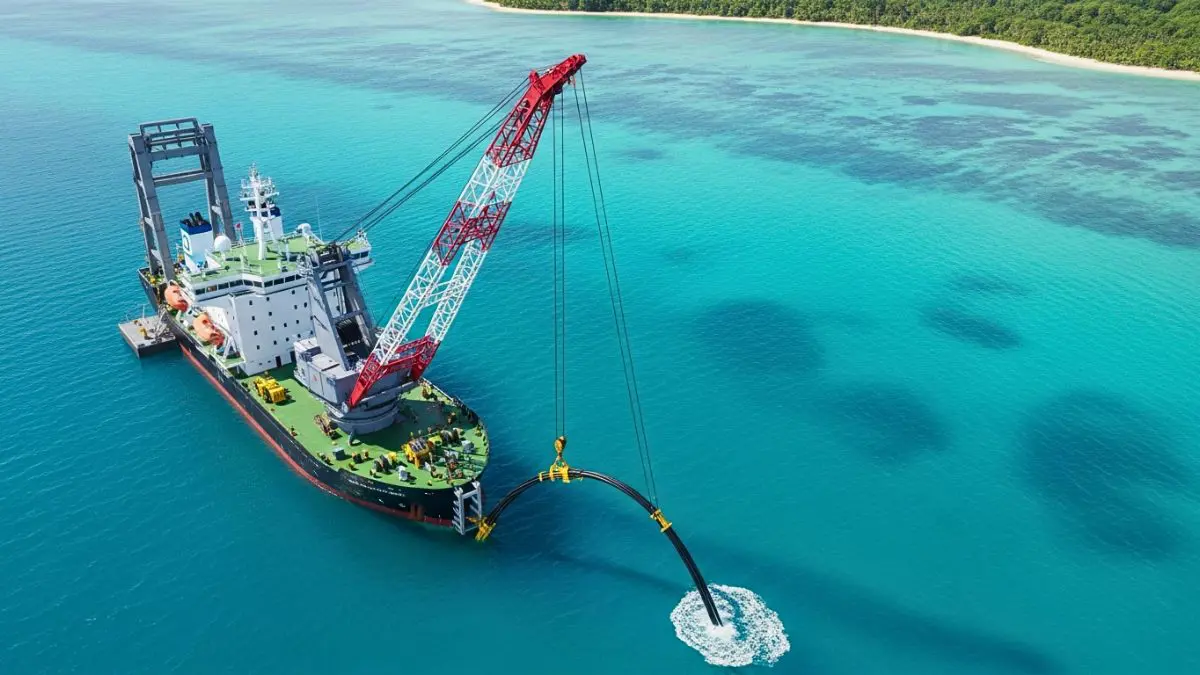
Papua New Guinea (PNG) confirmed on Friday that Alphabet Inc.’s Google will construct three new subsea internet cables to connect the island nation’s fragmented regions, a project fully funded by Australia under the countries’ recently activated mutual defense agreement.
The USD $120 million initiative marks a significant deepening of Western engagement in the Pacific, blending commercial technology with regional security strategy. Hon. Peter Tsiamalili Jr., PNG’s Acting Minister for Information and Communications Technology, stated the network will link northern and southern PNG, as well as the autonomous region of Bougainville, with high-capacity fiber links.
Funded by the ‘Pukpuk Treaty’
Minister Tsiamalili emphasized that the capital for the project flows directly from Australia’s commitments under the “Pukpuk Treaty,” the bilateral defense pact signed in October 2025.
“The entire investment is funded through Australia’s commitments under the Pukpuk Treaty,” Tsiamalili said. He framed the cables as a critical step in eliminating “single points of failure”—a chronic vulnerability in Pacific infrastructure—while positioning PNG as a viable hub for global digital business.
The project aligns with the strategic outlook of Canberra and Washington, both of which view PNG as a linchpin for stability in the Melanesian arc. With its proximity to vital shipping lanes, PNG has become a focal point for infrastructure investment as Western allies seek to counter growing Chinese influence in the telecommunications sector.
Google’s ‘Pacific Connect’ Expansion
The announcement follows high-level meetings earlier this week between Tsiamalili and Australian and U.S. diplomats at Google’s Australian headquarters in Sydney. While Google declined to comment on the specific contract terms, the project integrates seamlessly into the tech giant’s broader “Pacific Connect” initiative.
Separately, Google confirmed in November that it plans to establish a data hub on Christmas Island, an Australian territory in the Indian Ocean. That facility will serve as a redundancy node, linking cables eastward to Australia and westward toward Africa and Asia, hardening the resilience of the global internet against potential disruptions.
Dual-Use Infrastructure
These commercial expansions are occurring alongside tightening military ties. In addition to the Pukpuk Treaty with Australia, Papua New Guinea signed a landmark Defense Cooperation Agreement with the United States in 2023, granting U.S. forces access to key logistical facilities.
Upgrading civilian digital infrastructure serves a dual purpose: boosting the local economy while ensuring robust, secure communications channels are available for allied operations if regional tensions escalate.
Brief Summary
Papua New Guinea and Australia have activated a USD $120 million provision of their October 2025 “Pukpuk Treaty” to fund a new subsea cable network built by Google. The project will link Northern and Southern PNG with the autonomous region of Bougainville. This initiative merges commercial tech with national defense, strengthening PNG’s digital resilience and solidifying Western security architecture in the strategic Pacific region.
Frequently Asked Questions (FAQs)
Q1: What is the “Pukpuk Connectivity Initiative”?
It is a USD $120 million infrastructure project funded by Australia under the Pukpuk Treaty (a mutual defense pact signed in Oct 2025). The initiative will see Google build three new international-grade subsea cables to interconnect Northern PNG, Southern PNG, and Bougainville, creating a resilient “digital loop” for the nation.
Q2: Why is Google involved in a defense-funded project?
While the funding comes from a defense treaty, the execution leverages commercial expertise. Google’s participation ensures the cables meet hyperscale technical standards, making PNG an attractive destination for future digital investment. It also aligns with Google’s own “Pacific Connect” goals to build redundant global data routes between Australia, Asia, and the US.
Q3: How does this differ from the previous “Coral Sea Cable”?
The Coral Sea Cable (completed in 2020) was a single major artery linking Port Moresby to Sydney. This new project focuses on domestic resilience—fixing the internal bottlenecks that often leave large parts of PNG (like Lae or Bougainville) offline even when the international link is working.
Q4: Why is the connection to Bougainville significant?
Bougainville is an autonomous region with a history of political sensitivity. Connecting it directly to the high-speed national grid is a major political and economic gesture, fostering integration and stability as the region continues discussions on its future political status.
Q5: Is this related to military operations?
Indirectly, yes. The Pukpuk Treaty allows Australian defense personnel access to PNG’s communications systems. By upgrading this civilian infrastructure to “military-grade” reliability, Australia and the US ensure that allied forces have robust communication channels in the region, while simultaneously boosting the local digital economy.

























