Information technology
Researchers in China unveil mind-controlled car
09 Dec 2015
Amplifying — or removing — visual variation
By By Larry Hardesty, MIT News Office | 09 Nov 2015
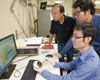
Graphene key to high-density, energy-efficient memory chips, say Stanford engineers
03 Nov 2015
Engineers are developing memory chips based on new nanomaterials with capabilities that silicon can't match

A basis for all cryptography
03 Nov 2015
A tool that would provide a secure foundation for any cryptographic system may be close at hand
IBM breakthrough paves the way for carbon nanotube electronics
05 Oct 2015
IBM Research has announced a major engineering breakthrough that could accelerate carbon nanotubes replacing silicon transistors to power future computing technologies

Supercomputer predicts death with 95% probability
15 Sep 2015
The system collects data on patients every three minutes, measuring everything from oxygen levels to blood pressure, warning of the impending death of a patient
Using magnetic permeability to store information
11 Sep 2015
Research helping build computers from DNA
19 Aug 2015

Could Computers Reach Light Speed?
28 Jul 2015
Light waves trapped on a metal's surface travel nearly as fast as light through the air and far enough to possibly be useful for ultra-fast electronic circuit interconnects
Cutting cost and power consumption for big data
14 Jul 2015

Elon Musk funds Oxford, Cambridge research on safe and beneficial AI
13 Jul 2015
Tesla Motors and SpaceX founder Elon Musk, who fears AI as "summoning the demon", hopes his research would help develop safer Artificial Intelligence
Encryption for everyone
10 Jul 2015
Better memory with faster lasers
08 Jul 2015
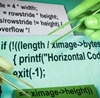
Automatic bug repair
By By Larry Hardesty | MIT News Office | 04 Jul 2015
An MIT-designed system fixes bugs by importing functionality from other programs — without access to source code
Encryption for everyone
27 Jun 2015

Latest articles






Featured articles

The decoupling paradox: Why Wall Street keeps funding AI despite $100 oil
By Axel Miller | 11 May 2026
AI infrastructure stocks continue rallying despite $100 oil as investors bet on productivity gains and semiconductor demand in 2026.

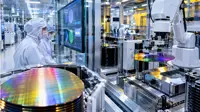
Hybrid bonding gains attention as AI chip packaging demand grows
By Cygnus | 23 Apr 2026
Hybrid bonding is driving AI chip packaging demand as backend technologies gain importance in the semiconductor supply chain.

The agentic transition: how enterprises are scaling AI from pilot to profit
By Cygnus | 22 Apr 2026
AI has entered its execution era. Discover how companies like Valeo and Microsoft are scaling agentic AI systems—from copilots to autonomous workflows driving real business impact.

Post-splashdown: What Artemis II taught us about the ‘deep space wall’
By Axel Miller | 15 Apr 2026
Artemis II splashdown marks a breakthrough in deep space exploration. Discover AVATAR radiation data, Orion’s distance record, and insights shaping NASA’s 2028 Moon mission.

Can aviation go green? The multi-billion dollar race for sustainable fuel
By Cygnus | 10 Apr 2026
Airlines are racing to adopt sustainable aviation fuel, but limited supply and high costs challenge the future of green aviation.

The battery race: who will control the future of electric vehicles?
By Axel Miller | 08 Apr 2026
The global battery race is reshaping the electric vehicle industry, with China, the US, and Europe competing for control over supply chains and technology.

AI vs governments: Who controls the future of intelligence?
By Cygnus | 07 Apr 2026
Governments and AI companies like OpenAI and Anthropic are shaping the future of intelligence amid rising policy conflicts and global competition.

Strait of Hormuz: how one chokepoint controls the global economy
By Axel Miller | 06 Apr 2026
The Strait of Hormuz is a critical global chokepoint. Learn how disruptions impact oil prices, shipping, and the global economy.

The $2 trillion AI infrastructure race: Who will control global compute?
By Cygnus | 06 Apr 2026
AI spending is set to exceed $2 trillion in 2026, driving a global race in data centers, chips, and energy infrastructure.






