UCSD uses heat energy to fix odd heart beat
17 Feb 2012
UC San Diego Sulpizio Cardiovascular Centre is now offering patients with atrial fibrillation the breakthrough benefits of heat energy, or radio frequency waves, to irreversibly alter heart tissue that triggers an abnormal heart rhythm or arrhythmia.
 The Thermocool SF Catheter is an FDA-approved outpatient procedure for an early-stage form of the condition called paroxysmal atrial fibrillation, when recurring symptoms are unresponsive to medicine. Patients typically experience rapid heartbeats that can lead to debilitating fatigue, dizziness, fainting or shortness of breath if left untreated.
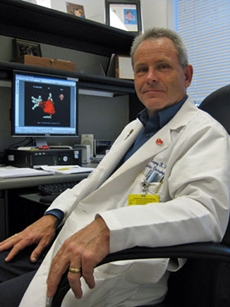
''Atrial fibrillation has a devastating impact on more than 2.7 million Americans, yet for many patients unresponsive to medication, traditional treatment options are limited,'' says Gregory Feld, MD, professor of medicine at University of California, San Diego and director of the Cardiac Electrophysiology Program at UC San Diego Sulpizio Cardiovascular Center.
Feld says, ''This catheter ablation technology is the latest treatment alternative for patients dealing with the disabling effects of cardiac arrhythmias, such as paroxysmal atrial fibrillation. This is a viable option for patients who do not benefit from their first medication.''
Atrial fibrillation causes the upper heart chambers to beat rapidly and uncontrollably, and is characterised by disorganised electrical activity in the heart. This results in an irregular pulse, and sometimes a ''fluttering'' feeling in the chest. An episode can last just seconds, or occur for minutes, hours or even days. Paroxysmal atrial fibrillation is an early-stage form of the condition, where episodes occur repeatedly but stop on their own, often in a few hours or less.
Performed by an electrophysiologist (EP), catheter ablation is a non-surgical procedure that addresses the underlying cause of arrhythmias. In real time, the clinician first pinpoints the source of irregular electrical activity using a 3-D mapping system, similar to a GPS device in your car. Guided by this map, the clinician directs a specialized catheter through the heart to the source of the abnormal electrical impulses. A small electrode in the tip of the catheter generates radio frequency waves that have enough heat to alter targeted areas of heart tissue. This process blocks the electrical impulses that can cause heart rhythm disorders.

























