Antiviral drugs may slow Alzheimer’s progression
18 Oct 2011
1
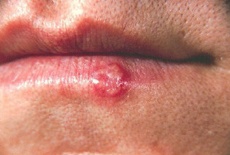
University of Manchester scientists have previously shown that the herpes simplex virus type 1 (HSV1) is a risk factor for Alzheimer's when it is present in the brains of people who have a specific genetic risk to the disease.
 Alzheimer's disease (AD) is an incurable neurodegenerative condition affecting about 18 million people worldwide. The causes of the disease or of the abnormal protein structures seen in AD brains - amyloid plaques and neurofibrillary tangles - are completely unknown.
The Manchester team has established that the herpes virus causes accumulation of two key AD proteins - ß-amyloid (Aß) and abnormally phosphorylated tau (P-tau) - known to be the main components of plaques and tangles respectively. Both proteins are thought by many scientists to be involved in the development of the disease.
''We have found that the viral DNA in AD brains is very specifically located within amyloid plaques,'' said Professor Ruth Itzhaki, who led the team in the University's Faculty of Life Sciences. ''This, together with the production of amyloid that the virus induces, suggests that HSV1 is a cause of toxic amyloid products and of plaques.
''Our results suggest that HSV1, together with the host genetic factor, is a major risk for AD, and that antiviral agents might be used for treating patients to slow disease progression.''
Currently available antiviral agents act by targeting replication of HSV1 DNA, and so the researchers considered that they might be successful in treating AD only if the accumulation of ß-amyloid and P-tau accumulation caused by the virus occurs at or after the stage at which viral DNA replication occurs.
''If these proteins are produced independently of HSV1 replication, antivirals might not be effective,'' said Professor Itzhaki. ''We investigated this and found that treatment of HSV1-infected cells with acyclovir, the most commonly used antiviral agent, and also with two other antivirals, did indeed decrease the accumulation of ß-amyloid and P-tau, as well as decreasing HSV1 replication as we would expect.
''This is the first study investigating antiviral effects on AD-like changes and we conclude that since antiviral agents reduce greatly ß-amyloid and P-tau levels in HSV1-infected cells, they would be suitable for treating Alzheimer's disease. The great advantage over current AD therapies is that acyclovir would target only the virus, not the host cell or normal uninfected cells. Further, these agents are very safe and are relatively inexpensive.
''Also, by targeting a cause of Alzheimer's disease, other viral damage, besides ß-amyloid and P-tau, which might be involved in the disease's pathogenesis, would also be inhibited.
''The next stage of our research - subject to funding - will focus on finding the most suitable antiviral agent - or combination of two agents that operate via different mechanisms - for use as treatment. We then need to investigate the way in which the virus and the genetic risk factor interact to cause the disease, as that might lead to further novel treatments.
''Eventually, we hope to begin clinical trials in humans but this is still some way off yet and again will require new funding.''
The study, carried out with Dr Matthew Wozniak and other colleagues in the Faculty of Life Sciences, is published in the Public Library of Science (PLoS) One journal.
Alzheimer's disease (AD) is an incurable neurodegenerative condition affecting about 18 million people worldwide. The causes of the disease or of the abnormal protein structures seen in AD brains - amyloid plaques and neurofibrillary tangles - are completely unknown.The Manchester team has established that the herpes virus causes accumulation of two key AD proteins - ß-amyloid (Aß) and abnormally phosphorylated tau (P-tau) - known to be the main components of plaques and tangles respectively. Both proteins are thought by many scientists to be involved in the development of the disease.
''We have found that the viral DNA in AD brains is very specifically located within amyloid plaques,'' said Professor Ruth Itzhaki, who led the team in the University's Faculty of Life Sciences. ''This, together with the production of amyloid that the virus induces, suggests that HSV1 is a cause of toxic amyloid products and of plaques.
''Our results suggest that HSV1, together with the host genetic factor, is a major risk for AD, and that antiviral agents might be used for treating patients to slow disease progression.''
Currently available antiviral agents act by targeting replication of HSV1 DNA, and so the researchers considered that they might be successful in treating AD only if the accumulation of ß-amyloid and P-tau accumulation caused by the virus occurs at or after the stage at which viral DNA replication occurs.
''If these proteins are produced independently of HSV1 replication, antivirals might not be effective,'' said Professor Itzhaki. ''We investigated this and found that treatment of HSV1-infected cells with acyclovir, the most commonly used antiviral agent, and also with two other antivirals, did indeed decrease the accumulation of ß-amyloid and P-tau, as well as decreasing HSV1 replication as we would expect.
''This is the first study investigating antiviral effects on AD-like changes and we conclude that since antiviral agents reduce greatly ß-amyloid and P-tau levels in HSV1-infected cells, they would be suitable for treating Alzheimer's disease. The great advantage over current AD therapies is that acyclovir would target only the virus, not the host cell or normal uninfected cells. Further, these agents are very safe and are relatively inexpensive.
''Also, by targeting a cause of Alzheimer's disease, other viral damage, besides ß-amyloid and P-tau, which might be involved in the disease's pathogenesis, would also be inhibited.
''The next stage of our research - subject to funding - will focus on finding the most suitable antiviral agent - or combination of two agents that operate via different mechanisms - for use as treatment. We then need to investigate the way in which the virus and the genetic risk factor interact to cause the disease, as that might lead to further novel treatments.
''Eventually, we hope to begin clinical trials in humans but this is still some way off yet and again will require new funding.''
The study, carried out with Dr Matthew Wozniak and other colleagues in the Faculty of Life Sciences, is published in the Public Library of Science (PLoS) One journal.

























