Space microbes aren't so alien after all
09 Jan 2019
1
Microbes stranded in the International Space Station (ISS) are just trying to survive man.
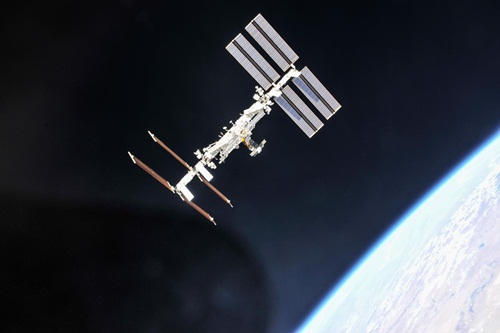
A new Northwestern University study has found that -- despite its seemingly harsh conditions -- the ISS is not causing bacteria to mutate into dangerous, antibiotic-resistant superbugs.
While the team found that the bacteria isolated from the ISS did contain different genes than their Earthling counterparts, those genes did not make the bacteria more detrimental to human health. The bacteria are instead simply responding, and perhaps evolving, to survive in a stressful environment.
"There has been a lot of speculation about radiation, microgravity and the lack of ventilation and how that might affect living organisms, including bacteria," said Northwestern's Erica Hartmann, who led the study. "These are stressful, harsh conditions. Does the environment select for superbugs because they have an advantage? The answer appears to be 'no.'"
The study was published today (8 January) in the journal mSystems. Hartmann is an assistant professor of environmental engineering in Northwestern's McCormick School of Engineering.
As the conversation about sending travellers to Mars gets more serious, there has been an increasing interest in understanding how microbes behave in enclosed environments.
"People will be in little capsules where they cannot open windows, go outside or circulate the air for long periods of time," says Hartmann. "We're genuinely concerned about how this could affect microbes."
The ISS houses thousands of different microbes, which have traveled into space either on astronauts or in cargo. The National Center for Biotechnology Information maintains a publicly available database, containing the genomic analyses of many of bacteria isolated from the ISS. Hartmann's team used that data to compare the strains of Staphylococcus aureus and Bacillus cereus on the ISS to those on Earth.
Found on human skin, S. aureus contains the tough-to-treat MRSA strain. B. cereus lives in soil and has fewer implications for human health.
"Bacteria that live on skin are very happy there," Hartmann said. "Your skin is warm and has certain oils and organic chemicals that bacteria really like. When you shed those bacteria, they find themselves living in a very different environment. A building's surface is cold and barren, which is extremely stressful for certain bacteria."
To adapt to living on surfaces, the bacteria containing advantageous genes are selected for or they mutate. For those living on the ISS, these genes potentially helped the bacteria respond to stress, so they could eat, grow and function in a harsh environment.
"Based on genomic analysis, it looks like bacteria are adapting to live — not evolving to cause disease," says Ryan Blaustein, a postdoctoral fellow in Hartmann's laboratory and the study's first author. "We didn't see anything special about antibiotic resistance or virulence in the space station's bacteria."
Although this is good news for astronauts and potential space tourists, Hartmann and Blaustein are careful to point out that unhealthy people can still spread illness on space stations and space shuttles.
"Everywhere you go, you bring your microbes with you," Hartmann said. "Astronauts are exceedingly healthy people. But as we talk about expanding space flight to tourists who do not necessarily meet astronaut criteria, we don't know what will happen. We can't say that if you put someone with an infection into a closed bubble in space that it won't transfer to other people. It's like when someone coughs on an airplane, and everyone gets sick."










.webp)