SUMO wrestling cells reveal new protective mechanism target for stroke
24 May 2013
Scientists investigating the interaction of a group of proteins in the brain responsible for protecting nerve cells from damage have identified a new target that could increase cell survival.
The discovery, made by researchers from the University's School of Biochemistry and published in the EMBO journal with additional comment in Nature Reviews, could eventually lead to new therapies for stroke and other brain diseases.
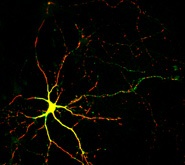 |
| Drp1 colocalisation with mitochondria in a neurone |
The research builds on earlier work by the team which identified a protein, known as SUMO, responsible for controlling the chemical processes which reduce or enhance protection mechanisms for nerve cells in the brain. The team's latest work has now identified the key role that SUMO plays in promoting cell survival.
During cell stress a protein response triggers a protective mechanism that allows cell adaptation and survival. This process, known as SUMOylation, involves the attachment of a small protein called Small Ubiquitin-related Modifier (SUMO) to target proteins.
This pathway is essential for survival of all plant and animal cells because it regulates how proteins interact with each other and can protect nerve cells against damage.
The findings have shown that SUMOylation of a protein called dynamin-related protein 1 (Drp1) is particularly important because it controls the release of chemical signals from mitochondria that instruct the cell to die in a process called apoptosis.
SUMOylation of Drp1 reduces mitochondrial release of these 'death' signals and helps nerve cells survive toxic insults associated with stroke. In the future, finding effective methods to enhance SUMOylation of Drp1 may also be beneficial for cell survival in other diseases including heart attacks and Alzheimer's disease.
The European Research Council-funded study, entitled 'SENP3-mediated deSUMOylation of dynamin-related protein 1 promotes cell death following ischaemia' published in the EMBO Journal and led by Professor Jeremy Henley from the University's School of Biochemistry.