Survival launches tourist boycott of Andaman's ‘human safari park’
22 Jun 2011
Survival International today called for tourists to boycott the main highway in India's Andaman Islands – an illegal road which cuts through the land of the endangered Jarawa tribe.
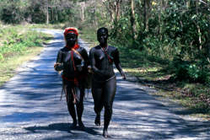 |
| Two Jarawa women on the Andaman trunk road |
The Andaman Trunk Road is both illegal – the Supreme Court ordered its closure in 2002 to protect the Jarawas, but it remains open – and highly dangerous for the Jarawa, who number just 365.
A report published by UNESCO has called for the immediate closure of the Andaman Trunk Road, which cuts illegally through the Jarawa tribal reserve. The report's recommendations also include protection of the Jarawa's territory from violation by poachers and other outsiders, and education of local Indian settlers and government officials about the Jarawa and their rights.
It concludes that self determination 'has to be the ultimate aim of any process that will involve the Jarawas – to help them negotiate with a rapidly changing, predatory world that exists around them.'
The hunter-gatherer Jarawa have only had friendly contact with outsiders since 1998 and so tourists risk passing on diseases to which the tribe has little immunity. An epidemic could decimate the tribe.
Thousands of tourists, both Indian and international, travel along the road each month. Rules supposed to protect the Jarawa are routinely broken, and the Jarawa reserve is in effect a human safari park.
Tour companies and cab drivers 'attract' the Jarawa with biscuits and sweets. One tourist described his trip: 'The journey through tribal reserve was like a safari ride as we were going amidst dense tropical rainforest and looking for wild animals, Jarawa tribals to be specific'.
 |
| Jarawa woman returning to her forest after gathering food on the edges of the Jarawa reserve. |
Local Andamanese organisation Search, which supports Jarawa rights, has also joined the boycott campaign.
Survival's director, Stephen Corry said, "We're calling today for all tourists to boycott the Andaman Trunk Road, which the local administration has kept open in defiance of a Supreme Court order nine years ago to close it. Despite the regulations tourists are still invading the Jarawa's territory, putting their lives at risk and treating them like animals in a zoo. If the situation does not improve we will call for a boycott of all tourism to the Andamans."