Measles - new inhibitor found effective in large animal model may help control local outbreaks
20 May 2014
A newly developed candidate drug against measles virus is effective in an animal model. During measles outbreaks, this compound may protect contacts of infected individuals from clinical signs and prevent virus dissemination.
Professor R. Plemper of the Institute for Biomedical Sciences, Georgia State University, Atlanta, USA, and colleagues have developed an orally bioavailable small molecule inhibitor against measles, which could be administered in tablet form.
The active substance, called ERDRP-0159, inhibits the RNA-dependent RNA polymerase, which is indispensable for the viral replication.
The candidate drug, which can be administered in tablet form, reduces the viral load in animals infected with a close relative of measles virus.
In addition, it also protects the animals from lethal disease outcome.
Science Translational Medicine reported on research results from scientists at the Paul-Ehrlich-Institut and Georgia State University.
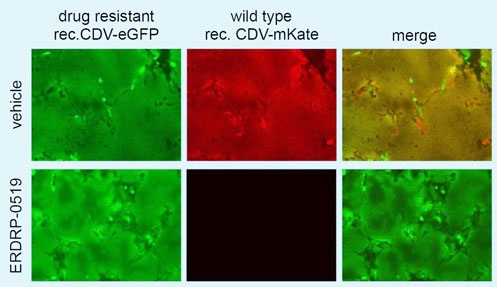 | |
| Shown are cells infected with drug-resistant (green fluorescence) and wild type (red fluorescence) recombinant canine distemper virus. Infected cells were treated with ERDRP-0519, or received solvent only Source: Georgia State University |
Despite world-wide efforts to eradicate the disease, measles outbreaks still occur time and again due to incomplete vaccine coverage.
Until recently, the development of antiviral drugs against measles has been hindered by the lack of a suitable animal model.
Towards this, Dr Veronika von Messling, head of the Veterinary Medicine Division at the Paul-Ehrlich-Institute, and colleagues have established an animal model, using ferrets infected with canine distemper virus (CDV) a very close relative of measles virus.
This project is part of the institute's involvement in the German Centre for Infection Research (DZIF).
Usually, an infection with this virus is lethal for ferrets. However, all animals survived if treatment with the inhibitor was started three days after infection and was continued for 14 days.
In addition to being well tolerated, the treatment even allowed the development of a robust immune response against the virus, protecting the animals from re-infection.

























