Security experts warn of terror drone attacks on high-profile targets
12 Jan 2016
Terrorist groups might use ''simple and affordable'' drones to attack high-profile targets or nuclear power stations in the UK, according to security experts.
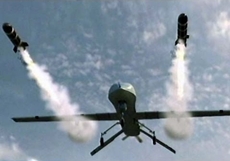 A report by the Oxford Research Group said, large numbers of drones commercially available in the UK could be weaponised by simply attaching explosives.
''The UK government, police, military and security services will need to introduce counter-measures to reduce or mitigate the risk of commercially available drones being used for attack,'' said the report by the think tank.
The group further warned that drones were already being used by terrorist and militant groups and the "technology of remote-control warfare is impossible to control.''
''Daesh is reportedly obsessed with launching a synchronized multi-drone attack on large numbers of people in order to recreate the horrors of 9/11,'' it warned.
In addition to examining over 200 models of drones available to the public, the group also researched incidents in which drones were used for disrupting major public events such as a Serbia and Albania football match.
The group further proposed introduction of a drone licensing programme to curb the destruction caused by potential drone attacks and expansion of anti-drone technologies such as lasers and radio jammers.
The authors said manufacturers should be made to program drones with the GPS coordinates of no-fly zones.
Currently in the UK, drones can be freely owned and operated for non-commercial purposes, provided their weight is less than 20kg, and there are hundreds that are available in the market.
"A range of terrorist, insurgent, criminal, corporate and activist threat groups have already demonstrated the ability to use civilian drones for attacks and intelligence gathering," the report reads.
"The best defence against the hostile use of drones is to employ a hierarchy of countermeasures encompassing regulatory countermeasures, passive countermeasures and active countermeasures."
However, David Dunn, professor of International Politics, at Birmingham University, told the BBC that terrorists might not be deterred by licensing.
"Law abiding citizens are likely to register, but it would be very difficult to stop terrorists and other criminals from purchasing drones abroad and then using them here," he said.
"Up until now it was expensive and required skill to be able to fly an aircraft - which acted as a form a regulation in itself.