Top ten universities conduct a third of all UK animal research
31 Oct 2016
The ten UK universities who do the most world-leading biomedical research* have announced their animal research statistics, revealing that they collectively conducted a third of all UK animal research in 2015.
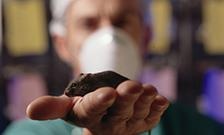 The top ten institutions conduct more than two thirds of all UK university animal research between them, completing a combined total of 1.37 million procedures. Over 99 per cent of these procedures were carried out on rodents or fish, and in line with national data they were roughly evenly split between experiments and the breeding of genetically modified animals.
The ten universities are listed below alongside the total number of procedures that they carried out in 2015. Each institution's name links to a breakdown of their individual animal research statistics.
University of Oxford: 226,214
University of Edinburgh: 212,695
University College of London: 202,554
University of Cambridge: 181,080
King's College London: 175,296
University of Manchester: 145,457
Imperial College London: 101,179
University of Glasgow: 49,082
University of Birmingham: 47,657
University of Nottingham: 31,689
"The fact that we perform a significant proportion of the UK's leading biomedical research is something to be proud of," says Professor Michael Arthur, UCL President & Provost. "It's no surprise that the universities who conduct the most world-leading research also use the most animals; despite advances in non-animal techniques, animals offer answers to many research questions that alternative methods cannot yet provide.
"With recent advances in gene editing techniques, genetically modified animals offer particularly promising avenues of research. This year, UCL researchers discovered a genetic defect in children with a rare and debilitating form of childhood Parkinsonism leading to difficulties walking and talking. By replicating the genetic defect in fish, the team were able to better understand the disease and test different treatments. When a drug that corrected the defect in the fish was given to a child with the condition, she regained the ability to walk."
All ten universities are signatories to the Concordat on Openness on Animal Research in the UK, a commitment to be more open about the use of animals in scientific, medical and veterinary research in the UK. 107 organisations have signed the concordat including UK universities, charities, research funders and commercial research organisations.
While many animal studies do not lead directly to treatments for diseases, 'basic science' research helps scientists to understand different processes in the body and how they can go wrong, underpinning future efforts to diagnose and treat various conditions. Additionally, many studies will show that a line of research is not worth pursuing.
Although this can be disappointing, such research is incredibly valuable as scientists need to know which methods do not work and why so that they can develop new ones. Animal studies can also help to answer a wide range of research questions that are not directly related to diseases, such as exploring how genes determine traits or how brain functions develop.