FATF puts Pakistan on grey list for terror financing
23 Feb 2018
The Financial Action Task Force (FATF) has put Pakistan again on the 'grey list', submitting it to intense scrutiny on terror financing under a "Compliance Document", after China, which usually comes to its aid could not help it this time around as one country's objection was not enough to block a resolution.
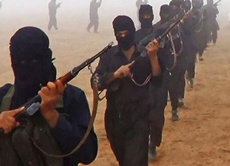 Unlike the NSG where one lone voice also counts, the FATF decides by majority and China decided to withdraw its objection to the nomination, allowing consensus to prevail, sources said.
The move, which is part of a broader US strategy to pressure Pakistan to cut alleged links to Islamist militants causing chaos in neighbouring Afghanistan, is likely to hurt Pakistan's economy and its already strained relations with the United States.
Pakistan has been lobbying to escape the terror financing list and had over the last week announced a crackdown on terror groups like the Lashkar-e-Taiba and Jaish-e-Mohammad banned by the UN Security Council.
Islamabad has sought to head off the FATF move by amending its anti-terrorism laws and by taking over organisations controlled by Hafiz Saeed, whom Washington blames for the 2008 Mumbai attacks that killed 166 people.
While the listing had been agreed to during the plenary session of the FATF on Friday, Pakistan would undergo a review at the next plenary in June, when it would be presented a full action plan on how it is expected to crack down on terror groups that operate on its soil.
The FATF is an inter-governmental body constituted by member countries in 1989 to set standards and promote effective implementation of legal, regulatory and operational measures for combating money laundering, terrorist financing and other related threats to the integrity of the international financial system.
Earlier this week, Pakistan saw victory as a preliminary discussion in the International Co-operation Review Group (ICRG) failed to build a consensus on putting it again on the terror-funding watch list.
On Wednesday morning, Pakistan foreign minister Khawaja M Asif, tweeted that Pakistan had won a reprieve of three months to convince the international body not to put it on a ''grey list'' of countries where terror financing and black money laundering needed scrutiny.
However, US and Indian officials had called the claim ''premature'' and said a final decision was still to come.
Pakistan was on the FATF watch list from 2012 to 2015, although only on issues of money laundering.
Pakistani newspaper reports said besides China, Turkey and the Gulf Cooperation Council (GCC) also had not backed the resolution in the ICRG, which was originally supported by the US, Germany, the United Kingdom and France.
But by Thursday night both China and the GCC dropped their opposition, diplomatic sources said.
The case against Pakistan outlined the government's inaction against outfits like UN-banned terror groups Jaish-e-Mohammed, Lashkar-e-Taiba, Jamaat-ud-Dawa and its affiliate, the Falah-i-Insaaniyat Foundation.
"The decision was taken on Thursday," the diplomat said.
The financial consequences of the move, however, would not kick in until June, which, in theory, could allow Pakistan the wriggle room to fix the terrorist financing issues. But the odds are still against Pakistan.