Rajan repeats crash warning, says West’s money bubble could burst
12 Aug 2014
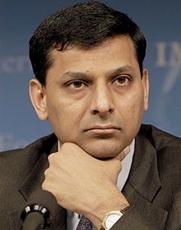 Reserve Bank governor Raghuram Rajan on Monday stuck to his warning of another imminent financial market crash on the lines of the 2008 global financial crisis, once the monetary bubble that is being created in the developed markets bursts.
Rajan said the sole dependence on monetary policy by the developed countries to boost their sagging economies has its limits and cannot be a panacea for all problems.
The developed countries could more effectively use their political systems to do more for improving the economies rather than depending solely on monetary policy, he said.
"My colleagues in industrial countries are trying too hard, and I would prefer monetary policy to do less and other parts of the economy, including the political system, to do more. If we try too hard, then we raise the probability of a crisis," Rajan said at an event in Mumbai.
Rajan, who was earlier chief economist at the World Bank, had predicted the 2008 crisis, which emerged from the unhinged lending operations of mortgage banks mainly based in the United States.
In an interview with London-based Central Banking Journal last week, Rajan had warned of a global crisis arising from an asset price crash due to the cheap money policy followed by most countries in the developed world.
"We are taking a greater chance of having another crash at a time when the world is less capable of bearing the cost," Rajan warned.
He also expressed fears that central banks "may be exhausting room on the financial side and creating a situation where there will be a discontinuous movement in financial sector".
Rajan, however, clarified that he did not mean that another crisis was imminent but only aired concerns about the fact that the monetary policy was overused.
"Instead of the political system taking action, reforming the economy, etc, as industrial countries also need reforms, they are relying on the monetary authorities to provide whatever boost that was required.
"I thought this was dangerous because monetary authorities across the world are boosting asset prices rather than real activity."
Rajan said if asset prices in developed economies could one day rise as in the case of developing countries, then it would create immense volatility and potentially some countries would be caught in that whirlpool.
And, if interest rates in industrialised economies rise, it could cause volatility across the world.
Rajan, however, tried to allay fears of global volatility affecting India, saying the strong macroeconomic fundamentals would help the country withstand any global volatility.
"We will be tested by capital outflows and my hope is that we have done enough in terms of strengthening the macroeconomic fundamentals of the country...as well as in building up reserves," Rajan said.
Asked why none of the domestic banks figure in the top 50 global banks, Rajan said we too have large banks relative to the size of the economy but we have low credit-to-GDP ratio.
"We need to grow the credit-to-GDP ratio from the current levels and we can have world size banks," Rajan said.

























