Greece set to lose as Tsipras wins austerity referendum
06 Jul 2015
Greeks on Sunday delivered a resounding rebuff to Europe's leaders by rejecting the terms of a bailout deal by the bankrupt country's creditors in a vote that could alienate Greece and pummel the European currency, Euro.
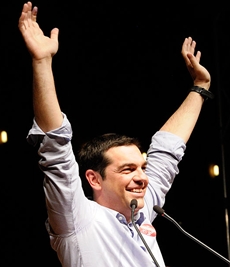 Prime Minister Alexis Tsipras has decisively won a vote against austerity, but at a cost, for he now has no one in the EU to lend on his terms as of now.
By rejecting the austerity plans proposed by European leaders and the international Monetary Fund by a resounding ''No'', the Greek have also shaken out of the euro zone, at least in financial terms.
As 90 per cent of the votes were counted, 61 per cent had said ''no'' to a deal that would have imposed greater austerity on the common man already suffering from financial amnesia.
However, by rejecting European austerity policies, Greece risks paying a high fiscal price and this could in turn hurt Tsipras's popularity, if the decision leads the country deeper into bankruptcy.
While the vote sharply consolidated Tsipras's position, it increased the risk of Europe deciding against fresh credit to a defiant nation and the chance of Greece being pushed out of the European Union, thereby creating fresh instability for Greece and the broader European Union.
The vote also made bargaining harder for Tsipras to strike a new financing deal with either European creditors or the IMF.
The ''No'' vote will have an immediate bearing on the fate of the country's struggling banks. Cash-strapped Greek banks, closed since last Monday, have been kept alive in recent weeks by emergency loans from the European Central Bank.
Policy makers at Greece's central bank will meet today to determine how much longer they are willing to prop up the Greek banks.
If the banks crash, so will the Greek economy, making the role of the European Central Bank crucial at this juncture.
Analysts, meanwhile, point out that the European leaders are also to blame for driving a hard bargain with a country that is Europe's weak link, by insisting on a stricter austerity rules for Greece, while showing flexibility in the case of larger countries like France in the past.
They say European officials will now have to make a climb back and acknowledge that rigid austerity terms are no panacea for Europe's debt crisis.
They aver Greece is already Left leaning and has, at least for the record, discussed bailout terms with Russia and it would be unwise for European leaders to push the country's government further.