Census reveals Bharat-India divide
04 Jul 2015
The first socio-economic and caste census of rural areas conducted by the government for the first time since Independence, has revealed that the number of financially excluded households in rural India stood at 70.5 million or 39.39 per cent of the 179.10 million total rural households.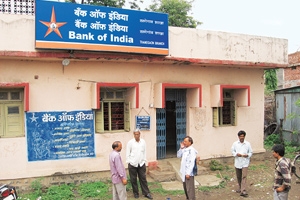
The latest household survey, conducted in 2012, showed that one out of three families is landless, less than 5 per cent of the rural households pay income tax, but over 68 per cent have mobile phones.
Released on Friday, the first SECC census in independent India - the last one was conducted in 1932 - did not include caste-specific data despite the title saying so.
Financial inclusion is based on fulfilling any of the 14 parameters:
- Owning motorised 2, 3 or 4 wheeler or fishing boat;
- Owning mechanized 3 – 4 wheeler agricultural equipment;
- Having Kisan credit card with credit limit of over Rs50,000;
- Having at least one household member as government employee;
- Households with non-agricultural enterprises registered with government;
- Any member of the household earning more than Rs10,000 per month;
- Paying income tax;
- Paying professional tax;
- House having 3 or more rooms with pucca walls and roof;
- Owning a refrigerator;
- Owning land-line phone;
- Owning more than 2.5 acres of irrigated land with one irrigation equipment;
- Owning 5 acres or more of irrigated land for two or more crop season;
- Owning at least 7.5 acres of land or more with at least one irrigation equipment.
Households automatically included (based on fulfilling any of the 5 parameters of inclusion, including households without shelter, destitute living on alms, manual scavenger families, primitive tribal groups, legally released bonded labour accounted for 1.65 million or 0.92 per cent.
According to the census, of the total 243.9 million households in the country, 179.1 million are in rural areas.
Of the rural households, 18.46 per cent belong to scheduled caste and 10.97 per cent to schedule tribe while 68.5 per cent belong to 'other categories'.
Interestingly, over 3.65 million families (a little over 2 per cent) belong to no caste or tribe category.
Five states with a high percentage of rural SC households are Punjab, West Bengal, Tamil Nadu, Himachal Pradesh and Uttar Pradesh.
According to the census, 5 per cent of the households draw government salaries, over 3.57 per cent relied on the private sector, and a little over 1 per cent of households depend on public sector enterprises.
However, over 68.5 million households (38.27 per cent) hold no land, deriving a major part of their income from casual manual labour.
Also, the number of households with destitutes or those living on alms is over 6.68 lakh; as many as 4.08 lakh households rely on rag-picking.
Reiterating India's lopsided growth story, the census records that the top earning member in almost two-thirds of the rural households in the country got less than Rs5,000 a month while in over 14.8 million (8.29 per cent) households, the top earner brought home more than Rs10,000 a month.
The census also gave a glimpse of the rural market, with one out of every five families owning a motorised vehicle (two, three or four-wheeler or a fishing boat).
''I am sure that with the enormity of schemes and the reach that all governments have, this document will form the basis of helping us to target groups to support in terms of policy planning,'' said finance minister Arun Jaitley, while releasing the report in the presence of rural development minister Chaudhry Birender Singh.
The paperless census was carried out in all the 640 districts of the country with the help of a handheld device.
''The data are an opportunity to make evidence-based selection, prioritisation and targeting of beneficiaries in different programmes,'' said rural development minister Birender Singh.
The rural development ministry has decided to use the SECC data in all its programmes.

























