Modified antibiotics kill drug-resistant superbugs in minutes: study
07 Feb 2017
Antibiotics could still kill superbugs if they pushed hard enough into bacterial cells, according to a new research that could pave the way for new therapies against antibiotic resistance.
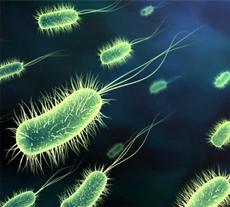 Researchers from University College London (UCL) in the UK measured the mechanical forces that four different antibiotics exerted on bacterial cells, using sensitive equipment.
''Antibiotics work in different ways, but they all need to bind to bacterial cells in order to kill them,'' said Joseph Ndieyira from UCL.
''Antibiotics have 'keys' that fit 'locks' on bacterial cell surfaces, allowing them to latch on. When a bacterium becomes resistant to a drug, it effectively changes the locks so the key won't fit any more,'' said Ndieyira.
''Incredibly, we found that certain antibiotics can still 'force' the lock, allowing them to bind to and kill resistant bacteria because they are able to push hard enough. In fact, some of them were so strong they tore the door off its hinges, killing the bacteria instantly,'' Ndieyira added.
The researchers conducted tests on bacteria that were susceptible to antibiotics and those that had developed resistance. Though all antibiotics exerted similar forces on susceptible bacteria, they noted variation in forces exerted on resistant bacteria varied significantly.
The researchers tested vancomycin, a powerful antibiotic used as a last resort treatment for MRSA and other infections and oritavancin, a modified version of vancomycin used against complex skin infections.
''We found that oritavancin pressed into resistant bacteria with a force 11,000 times stronger than vancomycin,'' said Ndieyira.
They found that the two antibiotics worked differently. While, Vancomycin disrupted vital processes to destroy the organisms, oritavancin was much more brutal and powerful.
According to Dr Ndieyira, the oritavancin molecules were good at forming clusters which dug into a cell and then pushed apart to tear the surface and kill it.
Oritavancin could kill bacteria in just 15 minutes but vancomycin took six to 24 hours.
"Our findings will help us not only to design new antibiotics but also modify existing ones to overcome resistance," said Ndieyira.