Health drink proves its claim to help Alzheimer’s patients
12 Mar 2016
A daily drink which manufacturers say can 'manage' Alzheimer's disease does actually stop the brain from shrinking, a two-year clinical trial has shown.
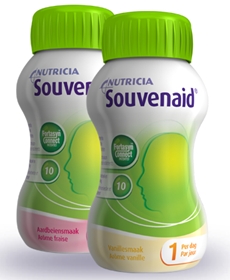 Souvenaid, which was created by Irish firm Nutricia Advanced Medical Nutrition, contains a cocktail of vitamins and nutrients which have been shown to boost brain function.
It has been on sale in Britain since 2013, but has never been independently tested to see if it actually works.
Now a clinical trial, funded by the European Union and carried out by the University of Eastern Finland has shown that it reduces brain shrinkage by 38 per cent over two years in people with Alzheimer's disease.
It was also shown to improve memory in people with mild cognitive impairment, which often precedes full-blown dementia, although it was found to have no overall cognitive benefit in people who had Alzheimer's.
Professor Hilkka Soininen, Professor in Neurology MD, PhD from the University of Eastern Finland, who headed the clinical trial, said: "Today's results are extremely valuable as they bring us closer to understanding the impact of nutritional interventions on Alzheimer's disease, which we are now better at diagnosing but unable to treat due to a lack of approved pharmaceutical options.''
The drink contains omega 3 fatty acids, the nutrient found in fish which is known to be good for the brain, with a daily dose equivalent to eating three or four herrings, as well as high doses of Vitamin E, B, B13 and C.
Other ingredients include uridine, which is produced by the liver and kidneys and found in breast milk, and choline found in meat, nuts and eggs.
Project coordinator Professor Tobias Hartmann of Saarland University, Germany, said, ''We have known for a while that diet can reduce the risk of developing dementia. Indeed, certain nutrients have been found to have a neuroprotective effect on the brain.
''However, translating this into an effective intervention hasn't been easy because single nutrients simply aren't powerful enough to fight a disease like Alzheimer's alone. Today's clinical trial results have shown that the key is combining certain nutrients, in order to increase their effect.
''This is exciting because it shows that in the absence of effective drug options, we really have found something that can help slow down some of the most distressing symptoms in Alzheimer's disease; especially in those who started the intervention early. Indeed those patients who have lost the least cognitive function, have the most to gain.''
Charities cautious
There are currently 850,000 people living with dementia in Britain which is due to rise to one million by 2025 and two million by 2050. But there are currently no effective drugs to combat the disease, and most experts believe treatments are at least five years away.
However Alzheimer's charities in Britain were cautious about the findings.
Dr James Pickett, Head of Research at Alzheimer's Society said, ''Today's results show that an over-the-counter nutritional supplement can bring memory improvements for people in the very early stages of the Alzheimer's disease, providing some relief to one of the most common symptoms.
''However, the study wasn't considered an overall success as there were no wider improvements in cognition and there was no evidence that the drink can slow the progression of Alzheimer's disease.
''People worried about their memory should visit their GP for advice. If early Alzheimer's disease is suspected, this supplement is one option for people to try, along with taking regular exercise, avoiding smoking and eating a healthy, balanced diet to keep their memory sharp.''
Dr Rosa Sancho, Head of Research at Alzheimer's Research UK, added, ''We know that a healthy, balanced diet can be important for reducing the risk of dementia. This nutritional drink aims to supplement a person's intake of certain nutrients that could help keep connections between nerve cells in the brain healthy, but previous trials of this product in people with Alzheimer's have had mixed results.
''Today's announcement is from a trial of Souvenaid in people with very mild memory problems, which are not severe enough to be considered dementia. While the initial results seem to suggest those using the drink may have reduced brain shrinkage, the product didn't show an overall benefit on memory and thinking, which was the primary goal. These preliminary results are interesting, but we will need to see the full published trial data to gain a better understanding of the potential of this intervention.''
The research was presented at the Springfield Symposium on Advances in Alzheimer Therapy in Athens.