Rotten egg gas holds key to healthcare therapies
11 Jul 2014
It may smell of flatulence and have a reputation for being highly toxic, but when used in the right tiny dosage, hydrogen sulfide is now being found to offer potential health benefits in a range of issues, from diabetes to stroke, heart attacks and dementia.
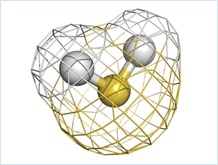 | |
| Hydrogen sulfide is naturally produced in the body and could have significant implications for future therapies for a variety of diseases |
A new compound (AP39), designed and made at the University of Exeter, could hold the key to future therapies, by targeting delivery of very small amounts of the substance to the right (or key) places inside cells.
Scientists in Exeter have already found that the compound protects mitochondria – the ''powerhouse'' of cells, which drive energy production in blood vessel cells. Preventing or reversing mitochondrial damage is a key strategy for treatments of a variety of conditions such as stroke, heart failure, diabetes and arthritis, dementia and ageing. Mitochondria determine whether cells live or die and they regulate inflammation. In the clinic, dysfunctional mitochondria are strongly linked to disease severity.
Professor Matt Whiteman, of the University of Exeter Medical School, says, ''When cells become stressed by disease, they draw in enzymes to generate minute quantities of hydrogen sulfide. This keeps the mitochondria ticking over and allows cells to live. If this doesn't happen, the cells die and lose the ability to regulate survival and control inflammation. We have exploited this natural process by making a compound, called AP39, which slowly delivers very small amounts of this gas specifically to the mitochondria. Our results indicate that if stressed cells are treated with AP39, mitochondria are protected and cells stay alive.''
Dr. Mark Wood of Biosciences, at the University of Exeter, adds, ''Although hydrogen sulfide is well known as a pungent, foul-smelling gas in rotten eggs and flatulence, it is naturally produced in the body and could in fact be a healthcare hero with significant implications for future therapies for a variety of diseases.''
The research is being conducted in several models of disease, and pre-clinical results are promising. For example, in models of cardiovascular disease, research shows that more than 80 per cent of the powerhouse mitochondria cells survive under otherwise highly destructive conditions, if the AP39 is administered. Professors Whiteman and Wood are now working towards advancing the research to a stage where it can be tested in humans.
The study was published in the journal Medicinal Chemistry Communications. A follow-up study, published in The Nitric Oxide Journal with collaborators from the University of Texas Medical Branch, also found that the compound selectively prevented mitochondrial DNA in mitochondria. Once damaged, this DNA cannot be repaired, leaving individuals more vulnerable to disease symptoms.
Early indications in small-scale studies, presented at this year's 3rd International Conference on Hydrogen Sulfide in Biology and Medicine in Kyoto, also show that in high blood pressure, AP39 reversed blood vessel stiffening and lowered blood pressure. It also dramatically improved chances of survival after a heart attack by slowing the heartbeat, improving its efficiency.
The collaboration was one of 20 research projects highlighted by Universities UK in their 'Ideas for Life' compilation for Universities Week of some of the most exciting, innovative research coming from higher education institutions across the UK.