labels: Information technology
Intelligent search engine Wolfram Alpha may redefine net search news
10 March 2009

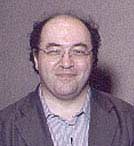
British physicist Stephen WolframHave you ever thought that the answers that the web-based search engine throws up in response to your query are not exactly what you wanted? Ever wished that you could tell the search engine what exactly you are looking for but found the words lacking? Well, if everything goes as planned, May may see the launch of a new internet search engine so intuitive that it actually understands human language, and so powerful that one expert has suggested it "could be as important as Google".

This amazing new product, codenamed as ''Wolfram Alpha'', has been developed by British physicist. The new search engine would attempt to handle some of the shortcomings of contemporary internet search by comprehending searcher's questions and explicitly replying to them.

Wolfram quoted that though the existing search engines are good at organising the knowledge that has been created on the web, as users can extract texts and phrases from the billions of web pages, but they're unable to work out new things.

Along the same line, he wrote in his blog post, ''But we can't compute from that. And in effect, we can only answer questions that have been literally asked before. We can look things up, but we can't figure anything new out''. 

According to Wolfram, his search site understands the users' queries, and presents the most suitable answers calculated using its extensive scientific and mathematical search engines.

Natural language processing - the ability to determine - has long been a holy grail for computer scientists, who believe for interacting with machines in an instinctive way. And that, says Wolfram, is part of the code that Alpha has cracked.


"The way humans normally communicate is through natural language - and when one's dealing with the whole spectrum of knowledge, I think that's the only realistic option for communicating with computers too," he wrote.

"Of course, getting computers to deal with natural language has turned out to be incredibly difficult. And, for example, we're still very far away from having computers systematically understand large volumes of natural language text on the web."

Other search engines, such as Google, compare search terms against billions of documents stored on their servers, before pointing to the pages on which the correct answer is probably kept. Although this method has proved phenomenally successful, many computer scientists have continued trying to create a system that can understand human language.

One of the most recent to claim a breakthrough was Powerset, which raised $12.5 million in funding and was under development for several years - but only released a limited search engine for Wikipedia before being bought by Microsoft for $100 million last year (See: Microsoft buys Internet start-up Powerset for around $100 million)

According to Nova Spivack, the founder of another intelligent web service, Twine, Alpha is far more impressive than what has gone before. "Wolfram Alpha is like plugging into a vast electronic brain," he wrote. "It provides extremely impressive and thorough questions asked in many different ways, and it computes answers - it doesn't merely look them up in a big database."

Wolfram's engine isn't going to replace Google, according to Spivack, although he suggests Google would like to own it.

"You would probably not use Wolfram Alpha to shop for a new car, find blog posts about a topic, or to choose a resort for your honeymoon. It is not a system that will understand the nuances of what you consider to be the perfect romantic getaway, for example-there is still no substitute for manual human-guided search for that. Where it appears to excel is when you want facts about something, or when you need to compute a factual answer to some set of questions about factual data."

Stephen Wolfram has a track record of scientific breakthroughs and some controversy. He received his Ph.D. in theoretical physics from Caltech in 1979 when he was 20 and has focused most of his career on probing complex systems. In 1988 he launched Mathematica, powerful computational software that has become the gold standard in its field.

In 2002, Wolfram produced a 1,280-page tome, A New Kind of Science, based on a decade of exploration in cellular automata and complex systems. The book stirred up a lot of debate in scientific circles. Legendary physicist Freeman Dyson described the tome as "a case of style over substance."


 search domain-b
  go
 
Intelligent search engine Wolfram Alpha may redefine net search