The coast is not clear
By T Damu | 21 Mar 2003
 Kochi:
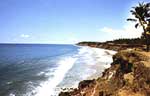
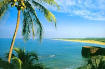
The serene palm-fringed beaches of Goa and Kovalam
and the heritage shores of Mahabalipuram and Kanyakumari
are the ones that showcased coastal tourism to India with
their different offerings. Thank the varied profiles of
these beautiful coastal towns.
Kochi:
The serene palm-fringed beaches of Goa and Kovalam
and the heritage shores of Mahabalipuram and Kanyakumari
are the ones that showcased coastal tourism to India with
their different offerings. Thank the varied profiles of
these beautiful coastal towns.
Individual states’ tourism efforts and private beach developmental activities of the sixties and seventies were the major factors that made these places shoot to fame. But, later, uncontrolled expansion and unscientific management of resources in these tourism spots and surrounding sites led to the spoiling of the pristine beauty of these beaches. Goa realised the harsh reality and corrected its blunders of the past. But other places are still in a shambles and muddle with no signs of their regaining the lost glory.
Tourism, over the years, has diversified into various products and packages. But coastal tourism, which is one of the favourite pastimes of tourists from across the world, is still rated as the most important tourism segment all over the world. There are around 7 hundred million international tourist arrivals worldwide in a year, a majority of which enjoys the coastal tourism products in one form or the other.
Don’t
misuse the advantage
Thus, worldwide, coastal tourism is increasingly getting
the impetus to woo tourists. Countries with the advantage
of having beautiful coastal stretches are vying with one
another to promote coastal tourism with a lot of new activities
and with a combination of activities like sports, cultural
festivals and nature trips. This has led to the search
for new destinations, which are increasingly becoming
the focus of developmental activities.
 Shorelines
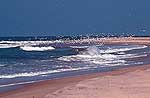
and coastal zones of the global landmass are home for
almost half of the world’s population, where lifeline
activities of these populations have an immeasurable impact
on coastal zones. The resource-based livelihood system
in coastal zones comprises fishing, farming, fish farming,
salt pans and livestock rearing. And the non-resource
based livelihood system contains small industries, and
government and tourism services. All these activities
have a bearing on the coastal ecosystem.
Shorelines
and coastal zones of the global landmass are home for
almost half of the world’s population, where lifeline
activities of these populations have an immeasurable impact
on coastal zones. The resource-based livelihood system
in coastal zones comprises fishing, farming, fish farming,
salt pans and livestock rearing. And the non-resource
based livelihood system contains small industries, and
government and tourism services. All these activities
have a bearing on the coastal ecosystem.
Tourism services in the form of operating hotels, restaurants, shacks and shops, renting out portions of residential accommodation, transportation, selling goods and services, carnivals and water sports also take their toll on coastal zones. These are purely tourism-related activities, which transform the traditional activity profile of coastal zones.
Thus the introduction of coastal tourism, while on the one hand provides more jobs to communities living in coastal zones, does alter the traditional livelihood of the coastal population. Hence any scant attention to details like occupational distribution, education, tourism-training needs and the involvement of local communities and panchayats in tourism will show coastal tourism in poor light and put the coastal eco-system in jeopardy.
Lack
of promotional activities
A major flaw of some tourism development activities is
that the focus of development is unfortunately only on
tourism promotion and not on socio-economic and ecological
enhancement of host destinations. It is estimated that,
in addition to the infringement of urban development,
coastal tourism promotional activities add fuel to the
already burning issues in coastal zones such as loss of
land due to shoreline erosion, water pollution, severe
damage to ecosystems and various health risks.
 Adding
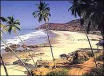
to these manmade menaces in coastal zones is the negative
impact of climate change, rising sea levels and sea storms
that eat away coastal lines and wash away natural barriers
like reefs and mangroves.
Adding
to these manmade menaces in coastal zones is the negative
impact of climate change, rising sea levels and sea storms
that eat away coastal lines and wash away natural barriers
like reefs and mangroves.
In coastal tourism, the intricate and delicate interplay of human activity with coastal eco-systems is a vital phenomenon that has to be monitored continuously and conscientiously. Any over-enthusiastic pursuit of ends will overburden resources and often turns out to be detrimental to shorelines and coastal zones, affecting natural resources of these eco-systems adversely and insidiously eroding the socio-cultural potential of these areas in the long run. Hence conservation of coastal zones is very important as they have an inherent potential to protect the physical and socio-economic wellbeing of human beings.
Any tourism industry activity in coastal zones should take into account many factors, which will have direct and/or indirect impact on the ecosystem. For example, in the case of the hospitality sector, resource-use patterns, local vegetation, waste generation and disposal mechanism are to be given utmost care in order to avoid any impingement of various domains of the coastal tourist destination. Any attempt to downplay the importance of these factors will lead to serious repercussions in the long run.
This calls for stricter implementation and monitoring of national coastal zoning policies like the Coastal Regulation Zone (CRZ) Notification, 1991. Studies reveal that only the coastal zones that form part of the tourist belt are subject to noticeable changes in landforms. The reasons are obvious: Rising human settlements, appearance of concrete structures, bustling business activities, haphazard reclamation activities and disappearance of natural vegetation.
 Destroying
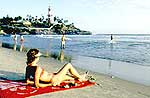
the coastal ecosystem leads to some major natural catastrophes,
namely the alternate erosion-accretion phenomenon, shrinking
of sandy stretches, disappearance of swamps, pollution,
depletion of dune and other forms of vegetation and the
ultimate destruction of highly prized, fragile and irreplaceable
natural resources.
Destroying
the coastal ecosystem leads to some major natural catastrophes,
namely the alternate erosion-accretion phenomenon, shrinking
of sandy stretches, disappearance of swamps, pollution,
depletion of dune and other forms of vegetation and the
ultimate destruction of highly prized, fragile and irreplaceable
natural resources.
One high risk faced by coastal zones is in the form of depletion of natural vegetation that has played a major role in the economic wellbeing of coastal populations. Take for example mangroves. India supports about 1 to 7 lakh hectares of mangroves, of which about 70 per cent are in the subcontinent’s coastal zones.
Control
the damage
But comparative studies show that what remains today is
only half of what was there in the sixties. Such an extensive
damage has occurred to a natural coastal vegetation. Though
natural reasons are not discounted in their disappearance,
human pressure on this vegetation is said to be the main
cause for this situation.
Denuding the natural vegetation of coastal zones deprives the local population of a potential source of livelihood and endangers the coastal zone’s natural environment with far-out consequences. One more danger of artificial vegetation is the homogenisation of coastal zones that destroys the diversity of the coastal vegetation and the uniqueness of each coastal zone.
 There,
on the other hand, is a very different problem altogether
— some beautiful shorelines with fantastic natural
vegetation are being eroded by sea and some romantic islands
with beautiful mangroves and other vegetation are being
submerged by sea due to global climatic phenomena. In
the absence of any scientific tourism developmental plan
for these areas, we are slowly losing some of these prospective
coastal tourism destinations. Lack of foresight, too much
red-tapism and the absence of participatory tourism promotion
lead to this pathetic situation.
There,
on the other hand, is a very different problem altogether
— some beautiful shorelines with fantastic natural
vegetation are being eroded by sea and some romantic islands
with beautiful mangroves and other vegetation are being
submerged by sea due to global climatic phenomena. In
the absence of any scientific tourism developmental plan
for these areas, we are slowly losing some of these prospective
coastal tourism destinations. Lack of foresight, too much
red-tapism and the absence of participatory tourism promotion
lead to this pathetic situation.
In India, there is no dearth of scientific coastal management knowledge and skills. And there are well-charted coastal zone policies as well. What is required is proper handling of these resources and strict enforcement of the guidelines by the authorities concerned. And, as regards the tourism provider, there has to be conscientious and scientific planning and execution of coastal tourism projects. The partners in tourism should first have a detailed multifaceted data on the coastal zones where they plan their tourism product.
Only after determining the proposed coastal tourism destination’s position from all angles should one plan a project with sustainable objectives and activities based on total quality management perspectives in place. Eco-responsible attitude and behaviour of tourists and the meaningful participation of the coastal population in the tourism project are no less important for a sustainable coastal tourism project, which will bring endless joy to present and future generations.
(The writer is an environmental activist and a senior executive in the hospitality industry. The views expressed in this article are strictly personal)