|
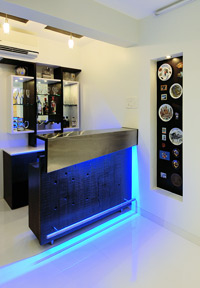 Planning for home interiors can be strenuous at times. With lot of ideas floating in the air and lots of suggestions bombarded by the creative minds surrounding you, designing your sweet home can become extremely confusing. Often with many things to plan, we neglect some of the most important aspects that make the house a dream place to live in. Lighting is one of those elements of interiors, which is often deferred till the end and then just finished off by the local electrician. Planning for home interiors can be strenuous at times. With lot of ideas floating in the air and lots of suggestions bombarded by the creative minds surrounding you, designing your sweet home can become extremely confusing. Often with many things to plan, we neglect some of the most important aspects that make the house a dream place to live in. Lighting is one of those elements of interiors, which is often deferred till the end and then just finished off by the local electrician.
What we fail to recognise is that, the way we need good vision to admire beauty, we also need excellent lighting to appreciate the interiors of our home. Lighting is an aspect that should be planned during the earlier stages of designing so that it not too late by the time you realise that a new fitting or wiring has to be installed on an already painted wall. Mr Milind Pai, Architect and Interior Designer gives us a low down on the do’s and don’t s of lighting up your interiors. Light defines space. Apart from the functional need, lights create an atmosphere and inform the mood of a room. Lights can enhance or undermine the interiors. Planning for lighting does not require too much—just a little bit of logic. There are three simple concepts of lighting: Ambience lighting
The general lighting of the room has to be well balanced. Ambience lighting can be direct or cove lighting. Direct lighting includes tubelights and halogen lights. Cove lighting is indirect lighting where the fixtures are quite hidden and the light is reflected through open or recessed spaces. Task lighting
Lighting arranged for a specific task or purpose is known as task lighting. For instance, lights on the kitchen platform need to be such that we are able to identify the jar of sugar and not add salt in our tea. You cannot have dull lights in the kitchen. Similarly you need appropriate lights near your study table and dressing area. Accent lighting
This is used to highlight special artefacts or objects in the room like a painting or a flower vase. Colours and lights in the interiors should compliment each other. Often mirrors are said to be useful to reflect light in the whole room. While mirrors do create an illusion of space, if not placed carefully, they may end up reflecting glares in the room that can be extremely disturbing. Read on for more on how to light the living room, the kitchen, the bedroom and the bathroom.
|


