Heavily polluted Yamuna water forces Delhi to go dry
24 Dec 2014
India's myopic planners may perhaps be forced to pay more attention to environmental issues, as taps ran dry for lakhs of Delhi residents on Tuesday after the Delhi Jal Board was forced to shut down two of its water treatment plants due to alarming pollution in the Yamuna - a river holy to Hindus.
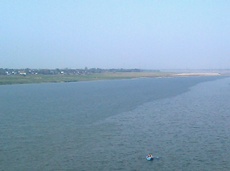 The national capital will continue to face a severe water shortage over the next few days, as the Jal Board battles a heavy inflow of industrial pollutants from Haryana, forcing it to shut down the Wazirabad and Chandrawal water treatment, affecting supply to nearly one-third of the city.
It shut down the plants as ammonia levels in the raw water at Wazirabad pond shot up to 2.6 mg/litre against the permissible limit of 0.2 mg/l.
The two plants account for 220 million gallons per day (MGD) of the total 835 MGD treated water from the utility. According to the Jal Board, almost one-third of the capital's population that lives in the Walled City, the New Delhi Municipal Council area, and Central, South and North Delhi will be affected as long as the plants remain shut.
The Jal Board was able to meet the morning supply schedule through local storages, but could not supply water in the evening. For those affected, it will provide drinking water through its tanker service.
''The raw water supplied by Haryana has been polluted due to release of industrial pollutants from Sonepat and Panipat drains,'' said Jal Board spokesperson Sanjam Chima.
She added that supply will remain affected till ammonia levels come down to a safe level, and there is no way of knowing when that will be. The Jal Board has written to the Central Pollution Control Board as well as the authorities in Haryana to come up with a solution.
According to the water utility, it is the first time that production in these water treatment plants has had to be stopped completely.
The DJB warned that the situation may worsen if Haryana doesn't take immediate steps to check industrial discharge into the Yamuna, mainly from drains in Sonepat and Panipat.
"The abnormal rise in the level of ammonia at the Wazirabad pond has resulted in a complete halt in production of 220 MGD of potable water supply from the Wazirabad and Chandrawal water treatment plants," said a DJB official.
The official said that the ammonia level touched an all-time high of 2.6 parts per million against the limit of 0.2 ppm. Water supply was affected in the Walled city and parts of central, south, north Delhi as well as NDMC areas.
"Looking at the seriousness of the matter, if necessary steps are not taken immediately, residents of Delhi may have to face acute shortage of water in the coming days...," the official said.