Dr. Kirit S. Parikh, former vice chancellor, Indira Gandhi Institute of Development Research
By Alok Agarwal | 24 Feb 2001
1
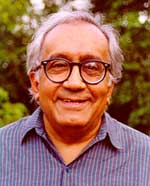 Dr. Parikh is a noted
name in the field on economics, having headed the Indira Gandhi Institute of Development
Research, a premier research institute. He has also been active in various other forums,
in which he has espoused the cause of development economics. He has also been on the panel
that reviewed the controversial Enron proposal in the state of Maharashtra.
Dr. Parikh is a noted
name in the field on economics, having headed the Indira Gandhi Institute of Development
Research, a premier research institute. He has also been active in various other forums,
in which he has espoused the cause of development economics. He has also been on the panel
that reviewed the controversial Enron proposal in the state of Maharashtra.
Some of his views and expectations from budget-2001:
- Interest rates should be rationalised.
- With growing competition from imports, domestic industry is in for a new ball game. Some industrialists treat this as an opportunity to forge ahead, while others were being diffident. However, going by the faith in Indian entrepreneurship, despite old habits dying hard, Indian industrialists would ultimately break free and soar high.
- Government should provide Indian industry with a level playing field in order to withstand competition from imports and foreigners.
- Capital costs should be brought down substantially.
- Fiscal deficit should be curbed and ruthlessly brought down.
- The power generation situation in the country should be improved drastically. Transmission and distribution losses should be tackled seriously, as the country is losing approximately Rs. 20,000 crore annually.
- The Enron project, despite the sharp criticisms it has earned from various political parties, would ultimately serve the country very well.
- Infrastructure should be attended to on a war footing, since bad infrastructure like roads leads to higher inventories and, hence, higher costs for manufacturers.
- Bad roads also suck out Rs. 20-30,000 crore in fuel costs.
- Hindrances like octroi should be abolished.
- Excise duty structure should be rationalised and anomalies removed. Alongwith this import duties structures should be brought in line with the excise duty structure so that the anomalous situation of imported products being lower in cost than domestically manufactured products is removed.
- Reservation of products for small-scale industries must be removed, since lack of economies of scale made cost of manufacturing in the small scale sector very high. Besides, small-scale industrialists do have the capacity to institute quality measures as a result of which the quality of their products is always suspect.
- De-reservation of small scale industries would result in a gigantic boost to exports. Indian can easily compete with China in the global market place given the right policies and the right infrastructure.
- Labour laws need to be revamped urgently and an exit policy should be put in place.
Government should take serious steps in the privatisation program and divest its holding in public-sector units. At present "the credibility of the country is going to the winds and we are becoming the laughing stock of the world".