All’s well that sells well
By Venkatachari Jagannathan | 31 Aug 2002
 Chennai:
After test-marketing in Bangalore, Kolkata, Hyderabad
and Kochi, Madura Garments is taking its Allen Solly women’s
wear national. For the garment division of Indian Rayon
and Industries, the first step towards this ambitious
goal is the launch of the brand in Chennai. This will
be followed by the Delhi and Mumbai launches.
Chennai:
After test-marketing in Bangalore, Kolkata, Hyderabad
and Kochi, Madura Garments is taking its Allen Solly women’s
wear national. For the garment division of Indian Rayon
and Industries, the first step towards this ambitious
goal is the launch of the brand in Chennai. This will
be followed by the Delhi and Mumbai launches.
“In a year’s time we will open 10 exclusive showrooms across India, vending Allen Solly women’s wear, apart from using the existing multi-channel distribution network,” says Indian Rayon brand director Shailesh Chaturvedi. On the drawing board is a 4,000-sq ft exclusive Allen Solly outlet in Chennai to retail both men’s and women’s wear.
Now, there is a hitch. Disturbing questions are doing the rounds about Madura Garments’ strategy on the Allen Solly brand.
First, is Madura Garments getting into a dangerous alley by retailing women’s wear under its nine-year-old, Rs 100-crore-sales men’s wear brand Allen Solly? While the greatest advantage is that the company saves a lot by not creating another brand, there is a peril involved: Will men, that egoistic creature, ditch Allen Solly and opt for other pure male brands? The simple logic being, ‘How can you have a family brand in garments like in soaps?’
 But,
then, Madura Garments is not the first company to convert
a male brand into a unisex one. Indus League Clothing
did so with its Scullers brand, and now it plans to do
the same with the Indigo Nation range. Ditto Colorplus
Fashions with its Colorplus brand, and ITC from the beginning
had a single garment brand: Wills Sport.
But,
then, Madura Garments is not the first company to convert
a male brand into a unisex one. Indus League Clothing
did so with its Scullers brand, and now it plans to do
the same with the Indigo Nation range. Ditto Colorplus
Fashions with its Colorplus brand, and ITC from the beginning
had a single garment brand: Wills Sport.
“Allen Solly is not a unisex brand for the simple reason that the shapes and sizes of garments vary between men and women,” says Madura Garments’ design consultant Stephen King. “I don’t expect men to switch over to other brands just because women’s wear is also available under the same brand.”
Here is a female voice. Says Madura Garments brand operations manager Bulbul Khera: “In the four cities where we had launched the women’s wear, there is no downward revision in demand pattern in the Allen Solly men’s range. Sales have actually increased and as per our market research many men feel happy that we have extended the brand to women’s wear.”
 Supporting
them is Indus League managing director Sriram Srinivasan:
“Our experiment with Scullers women’s wear has
given us enough confidence to go ahead with Indigo Nation
women’s wear. The sales of Scullers men’s wear
continue to be robust and have grown significantly over
the last few months. That is the only change we have noticed
after the introduction of Scullers women’s wear.
But we cannot conclude that the brand extension automatically
led to the growth of our men’s wear range.”
Supporting
them is Indus League managing director Sriram Srinivasan:
“Our experiment with Scullers women’s wear has
given us enough confidence to go ahead with Indigo Nation
women’s wear. The sales of Scullers men’s wear
continue to be robust and have grown significantly over
the last few months. That is the only change we have noticed
after the introduction of Scullers women’s wear.
But we cannot conclude that the brand extension automatically
led to the growth of our men’s wear range.”
Srinivasan says Indus League will extend the Indigo Nation brand to women’s wear soon with a similar pricing and market positioning. “If you look at brands internationally, the most successful ones cater to both the sexes. The reason for having an umbrella brand which covers both sexes comes from the benefits in terms of brand-building and retail distribution.”
But there are others in the industry who hold different views. “In the long run, there will surely be an impact with men switching over to other pure male brands,” says SM Fashions vice-president G Shankaranarayanan. SM Fashions, which sells the Natalia range, is the first Indian company to introduce western wear for women when other players feared to enter the segment.
Shankaranarayanan says for in-store garments — brands owned by retail stores — it is fine to have a single brand for both the sexes. “But when it comes to garments that are to be sold in multi-brand stores, it is better to have independent brands for different segments, like men’s, lady’s and kid’s wears.”
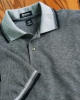 Nevertheless,
Madura Garments has kept its communication strategy simple
to address this issue. The visual will show an Allen Solly
male model welcoming Indrani Dasgupta, the female model,
with the ad-line: ‘Allen Solly introduces work wear
for women.’
Nevertheless,
Madura Garments has kept its communication strategy simple
to address this issue. The visual will show an Allen Solly
male model welcoming Indrani Dasgupta, the female model,
with the ad-line: ‘Allen Solly introduces work wear
for women.’
The second issue concerning Madura Garments is its categorisation of women’s garments based on body fits. Madura Garments has divided the body types of Indian women into four categories: Trim (hourglass figure — equal build at the top and bottom with a narrow waist); Comfort (small at the top and wide at the hips); Regular (wide shoulder and narrow at the waist and the hips); Straight (equal on the top and the hips).
This will result in Madura Garments and the retailers holding large inventories. And this assumes greater significance as the shelf life of any women’s wear is just 45 days; new style and colours should adorn the retail shelves to ensure repeat visits. Khera believes that Madura Garments will have higher inventory levels compared to other industry players. “But it is part of the business that customers’ exact needs need to be met.”
The western women’s wear segment is going through the same phase that the men’s wear underwent some years back, she says. “Initially, there was no standardisation in men’s wear and shirt sizes used to differ from city to city. But today, a 42-size shirt will measure the same throughout India. And this standardisation is what we are precisely trying to bring into the women’s wear segment in the country.”
Khera says Madura Garments will be the first company to talk about body types, and not sizes. “The choice of the garment fabric and the cuts are made keeping in view the body type. For instance, for women with broad shoulders the fabric and the cuts should de-emphasise the shoulders while enhancing the shape.”
 The
Rs 10-crore brand communication strategy has taken this
aspect into account and will accordingly address this
issue too, she adds. “The store salesperson will
be trained properly to help a shopper to choose the correct
fitting attire.”
The
Rs 10-crore brand communication strategy has taken this
aspect into account and will accordingly address this
issue too, she adds. “The store salesperson will
be trained properly to help a shopper to choose the correct
fitting attire.”
It’s a fact that Madura Garments, the leader in men’s wear, is making a delayed entry into the women’s wear segment. When it found the sales of 26 and 28 inches Allen Solly trousers were higher than other sizes, it decided to check out. Realising that those sizes were largely bought by women, it got the message that any further delay will turn out to be costly — already several others had entered the market and were expanding their presence.
For instance, SM Fashions had announced its plans to open 80 Natalia outlets across the country. Other bigger players like Pantaloon Retail (with its Annabelle and Srishti brands) and Colorplus Fashions were already there.
Madura Garments found the total women’s wear market size to be in the region of Rs 6,000 crore (as per an IMRB study commissioned by it). “Of that western wear accounted for Rs 600 crore,” says Chaturvedi. Curiously, the size of the women’s wear market equals (normally it is bigger) that of the men’s wear market. “The women’s wear market can grow up to Rs 2,000 crore,” he adds.
Indian women’s wear is classified into two segments: Indian wear (saree, salwar kameez and others) and western wear (tops, skirts and trousers). Barring sarees, women’s wear in India was unbranded till recently. Export surplus and rejects, and some unorganised players, catered to the demand for western women’s wear, mainly catering to middle-class aspirations.
 “The
organised Indian western women’s wear industry is
still in its infancy, facing all those problems the branded
men’s wear encountered in the eighties,” says
Chaturvedi. “But the market is set to grow what with
lots of young women now becoming figure conscious and
entering the corporate workplace.”
“The
organised Indian western women’s wear industry is
still in its infancy, facing all those problems the branded
men’s wear encountered in the eighties,” says
Chaturvedi. “But the market is set to grow what with
lots of young women now becoming figure conscious and
entering the corporate workplace.”
Shankaranarayanan says women’s and kid’s wears are the two growth segments now with men’s wear reaching mature levels. “The women’s wear segment is growing at 25 per cent per annum, while we are logging a growth rate of 35 per cent.”
For most players the target segment is women between 22 and 40 years, while for Madura Garments the core target is women between 22 and 32 years, who swings from western to Indian wear. “This is the group which is self-assured and employed,” says Chaturvedi.
Madura Garments has pegged its rates competitively. The knitted tops are available between Rs 499 and Rs 899, woven tops between Rs 599 and Rs 999, and bottom wear from Rs 799 to Rs 1,099.
Chaturvedi hopes to earn at least Rs 30 crore from women’s wear in two years’ time. “Our internal target is that the women’s wear segment should generate sales which is 30 per cent of the total Allen Solly sales.”
It’s not an easy task. To reach that target he has to increase the offerings fast. Currently, the Allen Solly women’s range does not have skirts. In terms of fabric though there is Tencil and Lycra, linen is what is missing in the Allen Solly range.