|
China's largest automotive parts supplier, Wanxiang Group Corp, is proposing to acquire a controlling 80-per cent stake in struggling US battery maker A123 Systems for $450 million. 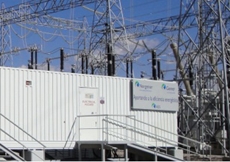 A123 Systems, which received a $249-million green-technology grant from the US government in 2009, yesterday said that it has signed a non-binding financing agreement with Wanxiang and expects to conclude an agreement soon. A123 Systems, which received a $249-million green-technology grant from the US government in 2009, yesterday said that it has signed a non-binding financing agreement with Wanxiang and expects to conclude an agreement soon.
Under the proposed agreement, Wanxiang would give A123 as much as $75 million in debt financing, may buy $200 million of senior secured convertible notes and invest $175 million by exercising warrants. A123, which spent 60 per cent of its cash reserves in the last quarter and only had enough left for the next four to five months, said that the agreement would remove the uncertainty regarding its financial situation and help it through the next several months. "A substantial capital investment from Wanxiang would not only provide financial stability to A123 as we continue to grow, but it would also align us with a large, successful global brand in the automotive and cleantech industries. "Wanxiang has a successful track record of operating in the US with significant employment and commitment to good corporate citizenship, and we expect that a strategic agreement with Wanxiang would help enhance our competitive position in the global marketplace, especially in China," said David Vieau, CEO of A123. Founded in 2001 by Dr Yet-Ming Chiang, Dr Bart Riley and Ric Fulop, Waltham, Massachusetts- based A123's Nanophosphate technology is built on novel nanoscale materials initially developed at the Massachusetts Institute of Technology. The Nasdaq-listed company develops and manufactures advanced Nanophosphate lithium iron phosphate batteries and energy storage systems that deliver high power and energy density, long life, for the transportation, electric grid, commercial and government markets. Its clients include German luxury carmaker BMW, China's SAIC and US electric carmaker Fisker Automotive. It is also expected to supply batteries for General Motors' upcoming Chevrolet Spark EV. The company received $249 million in grant from the US Department of Energy for building battery production facility. As of June 2012, it used $129 million of the grant to build the 550 MWh Livonia plant and the Romulus plant in Michigan. The government extended the remaining untapped $120 million grant's expiry date from end of 2012 to end of 2014. The company laid off 125 employees in December 2011 after Fisker reduced its purchase order of battery following a recall from Fisker and five other clients over defective battery packs and modules that cost A123 around $55 million. The company reported a second-quarter loss of $82.9 million, on revenues of $17 million. A123 reported net loss of $55.4 million in 2011. With annual revenues of more than $13 billion, Wanxiang Group has more than 45,000 employees across its global businesses in equipment and automotive parts manufacturing, clean energy, financial services, agricultural products, natural resources and real estate, among others. It has an automotive and industrial market subsidiary in the US called Wanxiang America Corporation employing more than 3,000 people, and an electric vehicles subsidiary in Hangzhou, China.
|


