|
Islamabad: Pakistan and Iran signed agreements Tuesday for the construction of a much-delayed natural gas pipeline, officials say. The deal was signed between the two countries in Turkey. India, too, was part of the project but a number of pressing reasons, mostly geo-political, have ensured that the project has now become a bilateral affair between Iran and Pakistan. The $7.6 billion project will do much to alleviate energy shortages in Pakistan. Pakistan produces just 80 per cent of its overall electricity needs. On the occasion Pakistani federal minister for petroleum and natural resources, Naveed Qamar, said the heads of agreement (HOA) and operational agreement (OA) signed in Turkey on Tuesday was a "historic achievement and a milestone towards meeting the energy needs of the country". He expressed hope that "physical work will start soon enabling the gas into the system by the timeline". The pipeline will connect Iran's South Pars gas field with Pakistan's Balochistan and Sindh provinces, which borders India. Each country will be responsible for building the section of pipeline that runs through its own territory. 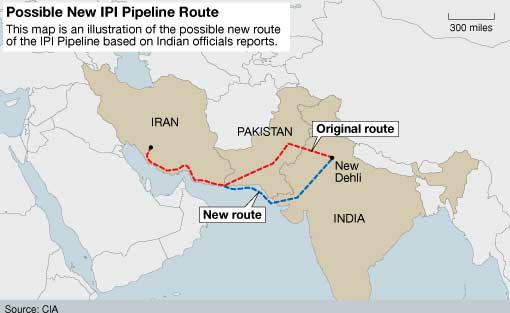
The pipeline, initially broached in 1994, was intended to carry gas from Iran to Pakistan and India. Recurring disputes on prices and transit fees, and a worsening security environment in the Indian sub-continent have seen India withdraw from the project, though it continues to maintain the facade that it is still considering the matter. Iran served a warning just last month that it could not wait indefinitely for the Indian side to make up its mind. China has evinced interest in the project seeking to replace India as a partner. Under the deal, by mid-2015 Tehran will begin supply of between 750 million cubic feet (21 million cubic metres) to one billion cubic feet of gas per day to Pakistan. "The HOA deals with transporting the Indian gas volume through the Pakistani territory if and when India decides to join the project," the Islamabad government said in a statement overnight. "As per the HOA, Pakistan will have the right to charge the transit fee in return of the safe transit of Indian volume," it said. It is widely perceived that New Delhi has been under sustained pressure from the United States to cold-shoulder Iran, which Washington views as a state sponsor of terrorism that is also doing all it can to acquire nuclear weapons illegally. The 900-kilometre (560-mile) pipeline is being built between Asalooyeh in southern Iran and Iranshahr near the border with Pakistan and will carry the gas from Iran's South Pars field. Meanwhile, minister Naveed Qamar said in Islamabad that total estimated cost for the Iran-Pakistan (IP) gas pipeline project would be in the region of $3-4 billion and that delivery would likely start in the next three to four years. He also said site survey and documentation work would start soon. The signing of the bilateral agreement would come as a blow for the United States government, which for long has been promoting a pipeline to both sub-continental nations from Turkmenistan via Afghanistan. Interestingly, Qamar mentioned that the Turkmenistan-Afghanistan-Pakistan-India (TAPI) pipeline project would be discussed next month. He said no progress could be achieved on TAPI pipeline project so far due to insurgencies in the region but, hopefully, the project would be launched next month. ''We will try our level best to utilise all bilateral options to finalise this project,'' he maintained.
|


