|
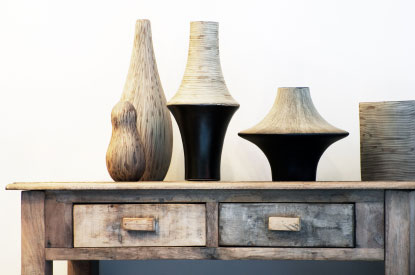
A piece of artefact, an interesting paperweight, pen-stand, pin holder, photo-frame, stationery, key-rings, cigarette case, ornate tableware, pretty jewellery boxes — all these not only add character and life to a house, but also reflect the owner’s personality. So while the interior decoration of any space at the macro level is more a rational issue — of taking into consideration convenience, practicality and budget — knick-knacks reveal the heart of the owner, they are truly a matter of creativity. People usually buy knick-knacks on an impulse from handicraft fairs, exhibitions, emporiums, or whenever an item catches their imagination and fancy. They acquire them as gifts and souvenirs too. And so these small little things often serve as mementos or have great sentimental value. They are often passed on from generation to generation. Knick-knacks add so much to the décor and yet they are not really an integral part of interior decoration. When strategically and aesthetically placed, they lend completeness and perspective to an interior or complement the decoration by highlighting, downplaying or balancing a particular feature or the overall look of it. Sometimes people’s fondness for such knick-knacks grows so much that they become an extension of their identity. For many people collecting knick-knacks is a hobby. Some kinds of knick-knacks make common collector items — I have seen about 99 collections of Ganesh idols or paintings, 300 collections of shells and rocks — while others are a rare delight. Ganesh idols or paintings, 300 collections of shells and rocks — while others are a rare delight. I once saw an exquisite collection of spectacle frames being displayed on a bookshelf. These were old, used frames that belonged to the owner. Frames from the early 1960s up to the last one that he decided to give up for a newer style in 2004 were all displayed tastefully along the bookshelves and side tables in the study room.  Knick-knacks don’t always have to be purchased. Kids' paintings put in an interesting frame, an old saree used as a wall hanging or shells strung as curtain rings can liven up your living room. They are personal and you will always have a story to tell about them. Knick-knacks don’t always have to be purchased. Kids' paintings put in an interesting frame, an old saree used as a wall hanging or shells strung as curtain rings can liven up your living room. They are personal and you will always have a story to tell about them.
If you are not the ideal crafts type, or have no time to create your own curios, buying them with care and precision is important, considering their aesthetic contribution in filling up the gaps in a décor, or representing a particular event of life or emotion. You need to have an eye for picking up a unique piece of bric-a-brac. Care needs to be taken that it either blends with your chosen style of interiors or complements it. A colourful ethnic mask in a dominantly black and white modernist living room looks stylish and attractive but an Andy Warhol in a Victorian bedroom will violate all standards of aesthetic decency. In India there are several options for buying accessories for your interiors. Here is a partial list: - Neighbourhood gift shops such as Archie’s or Hallmark,
The dollar shops or upmarket retail chains such as Westside or Shoppper’s Stop. - Retail outlets of NGOs like CRY, Helpage India or Mother Teresa’s Home, which are interesting places to buy things that make your house look good and your heart feel good too (these artefacts are handcrafted by the intended beneficiaries of these NGOs).
- Lifestyle stores such as Bombay Store or FabIndia also have a good collection of handcrafted, exquisite curio items. These chains have stores in many cities in India.
- State emporiums are the best place to hunt for a traditional piece of knick-knack if you are looking for regional ethnic stuff; Delhi Haat in New Delhi and Dakshinapan Complex in Kolkata are a home to various state emporiums and all under one roof.
- Handicraft fairs and exhibitions such as the Indian Handicrafts & Gifts Fair held at the India Expo Centre, New Delhi, and the India, Gift, Stationery Fair held at the Bandra Kurla Complex and the Kala Ghoda festival in Mumbai come with a wide variety and unique collections.
- Boutiques and individual curio shops dealing in really exquisite knick-knack items, which you can licate by browsing the net or by scouring the local marketplace. Though shopping in older markets can be time-consuming, they are excellent places for finding antiques and what can be passed off as 'kitsch'.
- Auctions are places where you could come across some unique antiques.
Knick-knacks are aplenty around us. But when we look for those ‘special things’ we have mentally pictured for our home, they seem to be so elusive. But keep searching. Sometimes you will delightfully discover them in the most unexpected nooks and corners.
|


