|
New Delhi: Negotiations for a production version of its indigenous Kaveri engine for its military aircraft is in the final stage of cost negotiations, Indian defence minister AK Antony informed the Rajya Sabha, the country's upper house of parliament on Wednesday. 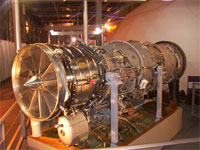 Negotiations are being conducted with French firm Snecma by a tender purchase committee which includes members from the Defence Research and Development Organisation (DRDO), the Hindustan Aeronautics Ltd (HAL), the Indian Air Force, the Indian Navy and the finance department of the ministry of defence. Negotiations are being conducted with French firm Snecma by a tender purchase committee which includes members from the Defence Research and Development Organisation (DRDO), the Hindustan Aeronautics Ltd (HAL), the Indian Air Force, the Indian Navy and the finance department of the ministry of defence.
'It is proposed to develop production version Kaveri (K10) engine on co-design and co-development basis with Snecma of France. The technical evaluation for this proposal has been completed. Tender purchase committee is negotiating the commercial aspects,' Antony submitted a written reply during the question hour. He said so far, nine prototypes of Kaveri engines and four prototypes of Kaveri Core (Kabini) engines had been developed, and about 1,975 hours of testing have been conducted on Kaveri and its core engines at ground and altitude conditions. Kaveri engine prototype (K9) was integrated with an IL-76 aircraft at Gromov Flight Research Institute in Russia. After adequate engine ground runs, the scientists had successfully completed the taxi trials and the maiden flight test of Kaveri engine with IL-76 aircraft for over an hour on 3 November last year, followed by three more flight tests. 'These flight tests covered a six km altitude and a speed of 0.6 mach (0.6 times the speed of sound),' he added. India had sanctioned the Kaveri engine development project on Mar 30, 1989 with a probable date of completion in December 1996. Some of the major reasons for time and cost overruns experienced by DRDO lab, the Gas Turbine Research Establishment (GTRE), were first-time development of an engine, lack of skilled manpower in engine manufacturing, enhancement in the scope of project during development, lack of infrastructure for engine manufacture testing and component/system level testing within the country. 'Flying test bed trials was not originally included as a milestone in the project. Engine and component failure during testing, which is inevitable in these kinds of projects, resulted in changes in design and material based on various reviews,' Antony said. It was also not possible to attract interest from foreign manufacturers as low order quantity did not reveal potential for commercial exploitation. US sanctions imposed in 1998, after India's nuclear tests in Pokhran, also affected delivery of critical systems and components, the statement said.
|


