labels: Brand Dossier, Marketing, Advertising / branding
Recession: a boost for online marketing news
06 February 2009

Despite its vast potential, 'social marketing' through the internet and mobile phones is still at a nascent stage, as marketers are still clueless about how to optimise the tool. Atul Hegde, head of the successful Ignitee India, offers his insights to Dhruv Tanwar

It's an ill wind that blows nobody any good. That old adage is certainly true of online advertising, which is seeing growth despite, or perhaps because of, the downturn in other advertising media. Ignitee India (formerly Connecturf) is getting its fair share of action, says Atul Hegde, the online ad agency's CEO.
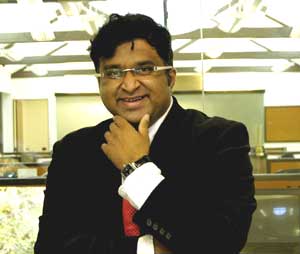
 Atul Hegde, CEO, Ignitee IndiaHe would know, having started out as the first employee of Mumbai-based EuroRSCG during its startup days in 1996, and rising from trainee to vice-president in just six years. In April 2008, he took over as CEO of Ignitee, with the challenge of making it the leader in digital media.

"The economic downturn has actually added a lot of business,'' Hegde admits candidly. So the economic downturn is really working for the online media business? ''It's the wrong way to put it, but yes,'' he says. ''Clients are now going to look at the digital medium more seriously, and the guys who were thinking about it will now start acting on it.''

Cost effectiveness is just one part of the story, he says. ''It is also because the entry barriers are low - you don't have to invest huge amounts of money to get in. It also gives an opportunity for one-to-one interaction, and is far more accountable [than other media]. So it's a gamut of reasons, and I think at this point of time when everybody is looking to cut corners and think twice before they spend, an advertising medium like this really helps.''

Setting up shop in the year 2000 in Mumbai as Connecturf, the company was renamed Ignitee, reportedly on account of ''a flash of inspiration'' that sparked off a revolution by offering 360-degree interactive solutions. Asked what exactly this means, Hegde says, ''Different models for different consumers.''

He elaborates, ''In the media buying model, the agency is a go-between for publisher and the advertiser. However, web development is something we do directly with the client, and there is no publisher involved. Similarly, Search is another different model. Web development, web applications, online search, and direct client engagement - it really depends on how we're engaging the client and with what model.''

The agency has created a niche for itself, with offices in Mumbai, Delhi, Chennai, Bangalore and Hyderabad, and one on the anvil in Dubai. It has over 100 advertisers across categories, and manages over 300 sites in India and abroad, including those of HDFC Bank, DLF, Religare, CNN, ICICI Prudential, ESPN, Jet Airways, Reliance Life Insurance, Agencyfaqs, E-bay, IDBI Bank, Tata Motors, Tata Indicom, NIIT and Microsoft.

On the employee front, Ignitee is a young place to work. ''If I get someone with five years of experience, he's a veteran, since this category is so young,'' says Hegde. ''When we started nine years back, we were the first. People with two or three years' experience are already at the middle or senior level. My search head, who runs the Google operations for us, must be 26 or 27.''

Social media optimisation
Hegde says marketing through the social media is still at a nascent stage. ''It's a buzz word, so people are excited about it, even though they don't really know what to do with it. You actually have a lot of people who can pull wool over your eyes, claiming to be social marketing gurus. I think marketers have to wake up and understand that yes, there is a lot of potential, a buzz, and that as a marketer you don't know enough about it, which is also why you are curious.''

Hegde feels that the social media in India will definitely catch up as a serious marketing avenue, given its potential, though he too is waiting to see how exactly brands would leverage it. ''Right now, I think there isn't anybody in the country who can actually claim to be a social media expert,'' he says. ''Having said that, we are doing social media optimisation campaigns for clients, but when we begin, we are very clear on clients' expectations.''

He says that the first step for a responsible agency is to educate the client about what social media does. ''It's a powerful tool, but there are two sides to it. The first thing for a marketer to remember is that he would have to give up his brand. He can't exercise control and say 'Ok, my brand is this or that'; that doesn't happen in social media. The audience doesn't care for what you think of your brand. It's all about what they are going to interact with.

''Therefore, the first step is to convince marketers to let go of their brand, let the consumer interact with it, knowing that there could be a backlash. Consumers can even denounce your brand, so you need to be ready for it and not get sensitive about it.''

However, if done correctly, social media optimisation, or SMO, can be at least partially successful, he says. ''It's not the be-all and end-all of marketing on the net. ''It's one of the parts, so we sell it like that. It will give you a certain buzz factor, which by definition means that it doesn't last for long. However, social media can be used for longer term brand building stuff.''

The crux of using social media as a marketing tool is the need for a very topical issue, says Hegde. ''For example, in IPL cricket you see Harbajan slapping Shreeshant - that will catch on immediately. The challenge is to take an everyday brand, which doesn't have such newsy or juicy stories, and then leverage social media.''

He is clear that SMO is not meant for sales. ''If you are going to approach it thinking that you are going to sell something, don't even come there. SMO is slow burn, it's about your brand, it's about interactions with the audience, and it's about long term planning. A cautious approach is much recommended, because at the end of the day there are great treasures that you can leverage in the social media. Don't be greedy about it - do it one step at a time and you'll see the results.''

Ignitee, he says, is doing just that, having started slowly with SMO engagements for a couple of clients. ''Typically we go with an annual plan, and we tell the client not to expect much in the first three or six months, as that is not going to happen.''

The potential is largely unexplored, says Hedge. ''The social media's potential for interaction should excite brand managers, because that's their dream - to get consumers to interact with your brand. That in turn will push marketers to bring in better products, to invest in their brands, so it will have its own cyclic effect.''

Mobile potential
''The mobile phone, both voice and SMS, is under leveraged as far as the communication industry is concerned,'' says Hegde. ''Just look at the numbers - around 60 million internet users on one side, and around 300 million mobile users on the other. The numbers are huge, but if you actually look at ad spends, only a minuscule portion of it is going into mobile.

''No doubt there are technological and mental barriers, in terms of screen size and the backlash caused by intrusive telemarketing, privacy concerns, and other such issues that the medium has to deal with.''

However, he says that as more features get added onto cell phones, it will evolve into the primary device for accessing the internet. Hegde would not, however, venture a guess on how long it will take for that scenario to pan out.

''Once it happens, there would be a merging of the internet and the mobile, making it difficult to define what is the internet, what is mobile - cell phone usage may become more for data than for calls. This actual mixing up of mediums will happen, with very thin boundaries around them.''

Such a convergence is certain to bring challenges for both marketers and agencies. ''The challenge for agencies like ours is to really understand the medium. I don't think there is a killer application that has been created for this medium, so we're still looking for that.

''The biggest challenge is to keep it simple. Sometimes technology companies go overboard and forget that the consumer using it doesn't want a device that is complicated to use. So while you have branded SMS, SMS 2.0, and voice SMS pushes, there is some kind of traction happening.

''However, after SMS and music downloads, WAP is still finding what the next big thing is. Whether it is going to be m-coupons, payments on the web, but after so much hype about WAP, we still haven't moved beyond basic usage,'' he points out. ''The same applies to communication. We have to leverage basic usage.''  He sees voice SMS as a device that can be used as a good branded, non-intrusive device, ''if done well.''

Accountability overstressed
''There is a legacy which I really think that both publishers and agencies like ours have got completely wrong,'' Hegde says, referring to the view in the industry that the accountability factor of the medium has been overstressed. ''Clicking through rates, leads, conversions, customer acquisition - all this is part of the sales lingo.'' Hegde adds that marketers have forgotten to ask basic questions like 'is my brand actually interacting with the consumer, is it actually visible, it is actually breaking the clutter...' questions typically used to evaluate main mediums such as television and print and outdoor.

''These things get forgotten because this medium lets you go and track them. That is something we want to take a step back at. The client is really not looking at the brand - its all about the clicks, but what has he done with that click? Is it of any use?''
His solution, ''Mediums need to work together, and that's when things work best,'' Hegde says. ''Take my own example as a consumer - I see the new Mahindra Xylo car being launched. I'm going to see the commercial, I'm going to read about where the dealer is in print, but I'm going to the net to search about it. I'll look for comments, opinions, various other ways to interact with it, which means that I am actually using various mediums around me to go and find out about the Xylo. That is how marketers need to leverage it,'' he advises.

It is vital to keep in mind that when people see an ad, they're going to go and search it on the internet, he says. Marketers need to evaluate whether they are servicing this search with a good destination that throws up in the search engine results, followed by a good website that answers all queries, and that all the search volumes they create through offline advertising are leveraged. ''That is the real effectiveness of a medium when it works in conjunction with other mediums.''

The current state of affairs would seem to put this thought on its head. ''Instead of that if I were to go and say that now that you've launched it, I will go and generate a hundred test drives for you for the Xylo, and it can happen best on the internet because you will pay only if someone fills in a form, then I have completely killed the effectiveness of the medium, to the larger sense,'' he says. 

''The client may say that this is highly focused, but you've got people today who spend loads and loads on the medium, rather than on print and television," Hegde claims.

''You have forgotten that you can actually target today, you can do frequency capping which means someone will not see my ad more than two or three times, which in turn means that there is no wastage. Someone is in this medium, actually searching for this product. I am not reading the newspaper to find out about the Xylo launch, but when I am actually doing a search on it, I really want to know who's doing it. That is the real power of the medium. That is what we're really going and educating clients about.''

Pointing out an example, he says the jaagore.com campaign provides an excellent example of combining mediums and driving people from one medium to the other.

''They're using offline, driving people onto a destination to do something. It is an excellent example of using offline as a medium, and as a service it's a great initiative.''

The next step, he says, would be to make the campaign even more sustainable, and not just about voting. ''There can be a lot more - keep the people engaged, build your community, get other communities to come and join you. Grow the entire thing, that's how the net works the best, and it mutates very, very fast. Have subgroups, increase your spread, and if you can be more accountable in terms of the users expectations, nothing like it.''

That seems a tall mandate for marketers, who are still struggling to make sense of email marketing. Are email campaigns really working?
''Depends on how it's done,'' says Hegde. ''A lot of international firms run successful email marketing campaigns. The idea is to have a balance. Don't spam the guy so much that he'll never look at your brand again. Have a specific offer, have something newsworthy, don't send email just for the sake of it.

''If done right, yes, it is an extremely cost effective way to reach out to your audience. But It needs to be used judiciously. Don't go overboard, and have some user relevance. Have your database segmented, try and understand your user. See how he has behaved on previous emails, has he interacted with them, has he trashed them, has he not seen them - track the entire thing. Contextual is also very, very important. Have a judicious mix of it.''

Being a medium of the literate, 'judicious' seems to be the buzzword for online, ranking alongside engagement, communities, and marketing. In the end, it's difficult to figure out the contents in this melting pot, unless you run a digital media agency that was amongst the first off the starting blocks, and strives to maintain that lead, as ignite has done.


 search domain-b
  go
 
Recession: a boost for online marketing