|
The
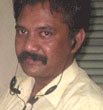
head of one of the largest insurance unions, M Karthikeyan
disagrees that merging the four public sector general
insurers would improve their ability to compete with their
new private sector rivals. In an interview with V Jagannathan,
he explains why.
Chennai:
At a time when two unions of the non-life insurance
segment are demanding a merger of the four government
owned insurers (National Insurance Company Limited, New
India Assurance Company Limited, Oriental Insurance Company
Limited and United India Insurance Company Limited), the
National Federation of General Insurance Employees (NFGIE,
which is also referred to as the Federation) has been
opposing the move.
The
merger of the four companies has the following advantages:
(a) size is important in any business and more so in the
case of insurers (b) higher underwriting and risk retention
capacity of a combined entity (c) increase in reinsurance
premium (d) reduction in reinsurance outflow (e) healthy
solvency margins (g) setting right the asset / liability
mismatch and (h) reduction in costs.
Way
back in 1999 domain-b.com had argued in
favour of merging the operations of the four insurers.
(See: Merger''s
the answer for general insurance). Eight years
later, the top echelons of the four companies seem to
be veering towards that view.
However, the Federation''s general secretary M Karthikeyan,
reacts differently, "Theoretically the argument is
sound. At the practical level a merger would succeed only
under a professional and with lower employee strength.
The present management cannot change its attitude to cope
with the challenges of a merged entity."
According
to him, all four companies and their former parent General
Insurance Corporation of India (GIC) lost precious time
and opportunity to venture into other areas in the financial
services sector, like banking and life insurance, while
today virtually every major financial services group has
a presence in the entire spectrum of the sector
banking, life / non-life insurance, non banking financials
services (NBFC).
Even
as a school-goer Karthikeyan, who holds on strongly to
his views, could not be brow beaten in to submission.
After he joined The New India Assurance Company Limited
in 1988, he took on his union''s unit secretary, while
an ordinary member of the union, for acquiescing to the
management''s policy of offering adhoc payments instead
of properly structured overtime wages for working on holidays
and after office hours.
"Either
pay us the actual overtime allowance or don''t pay at all,"
he argued. The management found it difficult to disagree
with the logic. Not surprisingly, he was chosen as the
unit head.
After
that there was no looking back for Karthikayen, then 42
year old. Today he heads the Federation with around 9,230
members and one of the three largest unions in the non-
life insurance sector. It is also the only union that
represents both officers and clerical staff is the first
non-life union to have a website of its own.
Says
former general manager cum director, New India Assurance,
A V Muralidharan, currently the chairman and managing
director, Export Credit Guarantee Corporation of India
(ECGC) "Karthikeyan is a capable leader with impeccable
integrity. He would passionately espouse the employees''
cause. I see another T K Rangabhasyam in him." The
late Rangabhasyam is remembered as a union leader in the
general insurance industry with gigantic stature and impeccable
integrity.
Adds
M Ramadoss, chairman and managing director, Oriental Insurance
Company Limited, "Karthikeyan follows his own set
of principles and holds on to his beliefs strongly."
Citing Karthikeyan''s views on the merger of the four companies
into one monolithic corporation, Ramadoss says, "While
a merger would make economic sense, Karthikeyan is of
the view that at the employee-level integration will not
work out lead to major consequences. His views on forming
strategic business units, increasing the in-house claims
survey are also worth considering."
A
commerce graduate from the University of Madras, Karthikeyan
has also done his Licentiate course from the Insurance
Institute of India. Though he aspired to become a chartered
accountant he had even passed one group of intermediate
level papers destiny had something else in store
for him. After a brief stint at Wipro in New Delhi, he
joined New India at Ranipet in the clerical cadre.
While
his wife, Srividya a school teacher, and daughter Kavvya
a school student, are both in Chennai, Karthikeyan is
in Mumbai to steer the union at a time when government
insurers as well the unions are facing a turbulent times.
Here
he talks about the issues faced by the government insurers,
unions and the way ahead. Excerpts:
In
your opinion what are the challenges before the public
sector non-life insurers face today?
The introduction of a detariff regime when the market
hasn''t matured has queered the pitch for government companies.
The fire premium has gone down by 55 per cent while the
premium in the other classes of businesses too has gone
down.
Unprofessional
brokers have forced the companies to charge risky rates.
Had there been a vibrant risk management sector, the premium
wouldn''t have gone down to such levels. In addition the
business procurement cost that used to be very marginal
has gone up to over 10 per cent, while the claims outgo
is not expected to go down.
The
management talks of reducing th overall costs by 5 per
cent, but that is going to be difficult. Given this situation,
I expect government owned insurance companies to face
a cash crunch in the coming years. Already National Insurance
Company Limited is facing problem in meeting the minimum
solvency norms.
The
other issue is the redundancy of the staff. Private companies,
in order to cut their employee costs, have allowed clients
to generate policies at their end over the internet. The
government companies too, but in a limited way, have allowed
policies to be generated at their clients'' end. If this
practice continues, then existing staff will become redundant.
Reducing the staff will not be easy as the companies are
not in a position to fund another round of voluntary retirement.
What
is prescription for each of those challenges?
I have some random thoughts. Aping the private sector,
the government companies too have started outsourcing,
which only adds to costs. The one logical way is to demerge
the various operations that could be outsourced into wholly
owned subsidiaries. For example, the companies can float
their own third party administrators (TPAs) transferring
people from the parent company.
This
way the government owned companies can reduce their cost
and also retain the cash outgo within the family. Similarly
the companies can ask the government to amend the Insurance
Act to enhance the in-house survey limit for clais up
to to Rs2 lakh from Rs20,000 at present, which has been
continuing for several decades.
Do you think that the management of the four companies
are vindictive towards the staff?
Certainly, yes. Today the managerial cadre acts vindictively
and harassment has gone up. For instance, the management
is not concerned about offering a promotion to those in
the peon, driver cadres. Out of the six cadres, four are
left out of the promotion policy. Actually the companies
are top heavy. The ratio of officers to clerical cadre
is a meagre
1:1.14 against the norm of 1:3.
What
is the attitudinal change you see in your members towards
the union and its activities?
Gone are the days of passionate union members. Ever since
economic liberalisation was ushered in, there has been
a change in union members'' attitude towards unions. The
implementation of voluntary retirement scheme and compulsory
transfers has resulted in many quitting the companies
and the unions. Times are going to be tough for the unions.
The
average age of the employees in all the four companies
has been rising, which affects the companies and the unions.
How can the age factor be remedied?
Nearly
60 per cent of the existing employees will retire by the
year 2011. Employees in large numbers will start retiring
from 2009 onwards. Those who will remain in service at
that time will be nearing 50 or have crossed 50. The management
is not alive to this situation.
They
fear that fresh recruitment means increase in union membership.
My view is that the company should recruit people in all
age groups - below 25, and between 25 and 40 so that there
is a good mix of people and the transition is also smooth.
Though
private insurers entered the sector six years ago, existing
trade unions have not been able to expand their reach
to them.
I
agree that it is time to look at the private sector employees.
They should also unionise like their counterparts in the
private sector banks.
At
the political level we see vibrant coalitions, which is
absent in the unions in your sector. Like the General
Insurance Public Sector Association (Gipsa) representing
the four companies, can''t the unions form a similar body?
We are in favour of a coordinated approach amongst the
unions just as Gipsa. Time will force the unions to shed
some of their outmoded thoughts and join hands.
|