Indian Banks in an IT trap?
08 December 2005
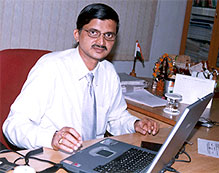 "Even large Indian banking software companies will not qualify for tenders from the nationalised banks for core banking solutions, on the strength of their product revenues alone. It is only because of their huge software services revenues that they are able to meet the tender norms. Such luxury is not available to us, as we are a pure products company," says B Suresh Kamath.
After implementing its core banking solution in two nationalised banks — Corporation Bank and Andhra Bank — Laser Soft seems to have hit a dead end with PSU banks. He feels some nationalised banks put up unreasonable tender conditions, requiring vendors to have a turnover of a couple of hundred crore rupees to qualify.
He says the cost per branch for a bank that implements Laser Soft's Laser Panacea banking solution works out to just Rs4 lakh, as against Rs1 crore in the case of the competition. The operational or maintenance cost is just one rupee per account per annum, as against Rs500 or over per account for the competition's software.
Kamath says Laser Panecea is the lightest core banking solution in the world. "The cost per transaction for Corporation Bank is just eight paise. Our programmes do not use huge bandwidth and do not require expensive hardware," he says, adding, "Corporation Bank's server costs just Rs6.5 lakh whereas other banks shelled out up to Rs25 crore."
Basel II norms require banks to store 12 years data, and Kamath claims that none of the rival core banking solutions have such a capability, while Laser Panacea has an archival capacity of 25 years. "We have developed a new programme and SBI has placed an order for it," he says. According to him, SBI saves a huge amount using Laser Soft's e-Circular product.
