|
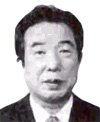
Dr Shoji Shiba, Japanese quality expert who taught at Sloan School of Management, MIT, from 1990 till his retirement last year, tells Indian CEOs that 'breakthrough' management, rather than core competencies and TQM, is the key to winning in the great new globalised world. Venkatachari Jagannathan reports. It's a radically new paradigm to achieve exponential growth. To even undertand it, CEOs of established companies need to think laterally; even forget concepts like core competency and cost cutting. "In a globalised business environment, one should think radically and be willing to take risks," says 72-year-old Japanese management guru Dr Shoji Shiba, a staunch advocate of the breakthrough management concept. Dr Shiba will assist seven Indian companies - Brakes India, Ucal, TVS Motor Company, Lucas TVS, Technova Imaging Systems, SRF and Sona Koyo Steering Systems - in pursuit of breakthrough management. These companies were selected by the Confederation of Indian Industry (CII) as they were conversant with concepts like total quality management (TQM). For CII, this is a logical extension of the cluster approach it initiated years ago, among the vendors of Maruti Udyog. At the time, Japanese gurus had introduced those companies to operational aspects of concepts like TQM. This time, CII felt that Indian manufacturing companies should embrace breakthrough management. Earlier, Japanese gurus looked at the operational side of business. Now, Dr Shiba will help company CEOs to chart a strategic vision. This guru, however, does not like to call his group a cluster. He says it's a learning community. Nor does he say he is advising them. "I will think along with them, give my ideas and try to transfer my skills to help them see the future and chart out a breakthrough strategy. Then, I will visit their companies, listen to their strategy and give feedback," he explains. It is like his pet fish bowl theory. Simply put, a manager should visit customers where the product or service is being used - jumping into the fish bowl. (S)he should experience the environment in which the product is used - swimming alongside the fishes and then jump out of the bowl to chart out the future course of action with the insights gained. He says a company can expand only to a certain extent. If a company has saturated the domestic market then the export market is available. But even that is limited. How to grow beyond that? His answer: Start a new venture. That is breakthrough management. His usual example is a Chinese toothpaste company. It started by selling toothpaste, then went on to making and selling the machinery and the product technology. In a way Dr Shiba himself did precisely that. An expert in incremental improvements through the practice of quality processes like TQM, Dr Shiba started consulting on breakthrough management in 1977. "I decided to forget that I am an expert in incremental improvements. I denied myself completely." However, that doesn't mean he advocate mindless diversification. There must be a cap on the extent of finances that can be risked in pursuit of a new venture. A Deming medal winner in an individual capacity for propagating TQM amongst corporates and governments, Dr Shiba has authored books like 'A New American TQM' (co-authored by David Walden and Alan Graham), 'Integrated Management Systems' (co-authored by Thomas H Lee and Robert Chapman Wood), 'Four Practical Revolutions in Management' (with David Walden) in English and 'Breakthrough Management' (Japanese edition in 2003; an English version is expected in 2005). Dr Shiba is professor emeritus of Tsukuba University in Japan. From 1990, he taught at the Sloan School of Management, MIT. Dr Shiba retired last year. Now on his second visit to India - the first was in May 2003, when he was completely bowled over by the unassuming and non-bureaucratic attitude of India's president, Dr A P J Abdul Kalam. Dr Kalam says that there are three types of industries in India. The first (and the majority) are those units that manufacture as per specifications given by other industries. The second is the kind that gets a licence from a foreign company and manufactures its products. The last (and smallest) category is those that invest in research and development (R&D) and produce their own products. The president requested Dr Shiba to try and increase the numbers of the last two categories of industries in India. Dr. Shiba will also work with the National Manufacturing Council and advise CII on what the Indian industry can accomplish. Speaking about his Indian mission he says, "My job is to change the mental make up of Indian CEOs in the era of globalisation." Excerpts from an interview: What is breakthrough management? Why it is important now? The age of corporate management can be divided into three parts. The controlled management era (in vogue from 1930s) is top down, where quality is controlled with mass production in mind. Next is the era of continuous and incremental improvement, started in the 1960s, where the individual - the customer and worker - is the focal point. The approach is bottom up - the Japanese style - where workers get involved. The goal is to satisfy the current customers and to achieve defect reduction. The improvements are based on internal information. But the internet and globalisation of economies have ushered in the breakthrough management era. If a company has to grow at an accelerated speed, it has to pursue radical business ideas that may even include changing the line of business line or transforming the business to become more innovative and powerful. The idea is to create a consumer segment where it didn't exist earlier. As product life cycles are getting shorter and competition is increasing, Indian companies need a new direction - so breakthrough management is important. Do you mean that a company might even have to exit its current line of business? But what about core competency? Yes. If need be, one has to kill the current source of income to jump to the next level. And that needs a strong mind. Core competency is a narrow concept compared to breakthrough management; the former is more concerned with technical strengths and corporate culture. Similarly, diversification of business is a move to protect against existing risk. Breakthrough management does not think about existing risk. It is about the taking of a future risk. The key is to unlearn what is learnt and learn new strategies. How would you convince CEOs about something so radical? I do not 'convince' CEOs. Some CEOs have the intuitive capability to spot a good business opportunity. So it is better to make the CEO interested in a proposal. Breakthrough management is for CEOs with a Moses mentality - convinced about the existence of the `promised' land. If getting into new lines of business is a continuous process, then at what intervals should a company start new ventures? Say every five or 10 years. That is also the usual product life cycle. Breakthrough management principle is applicable for all kinds organisations - small, medium and big. How can an organisation implement breakthrough management? It will be in phases. The idea is individualistic, where the idea generator forsees the market, the changes required, and makes a business case for the idea. The second stage is to develop the technical capability and the infrastructure to execute the idea. Breakthrough management needs creativity, and one should enhance that. The degree of creativity may differ from person to person. But if the systems and processes are set for racking up ideas, then there will be improvement. What are the challenges a CEO will face when pursuing breakthrough management? It is easy to kill breakthrough management in an organisation because a controlled and incremental management earns money by focusing on its current customer. On the contrary, a breakthrough involves spending money initially. So it is imperative for a CEO to be involved directly and actively, otherwise the breakthrough will not survive. What is American TQM and how it is different from Japanese TQM processes? The US mentality can be summed up in couple of acronyms: NIH Not invented here; IAKI - I already know it; and PITM - prove it to me. So, American TQM is nothing new, it's just formulated in the US.
|