labels: interviews
Unions put on noticenews
10 November 2004

A new survey reveals the change in Tamilnadu's government employees towards confrontations. V Jagannathan interviews K Srinivasan, MD, Prime Point, which conducted the image audit jointly with Public Services International
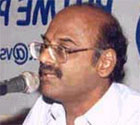
K SrinivasanChennai: A joint perception / image audit conducted by Public Services International (PSI), France and the Chennai-based Prime Point Public Relations P Ltd amongst Tamil Nadu government employees has brought out the changing attitude of members towards their unions.

According to the PSI-Prime Point image audit, nearly 80 per cent of the 3,000 respondents disapprove of employee unions having political affiliations. Around 70 per cent of respondents strongly feel that the decisions of such unions are not based on employee welfare but on the political alliances.

Things were different in the past when employees favoured politically-affiliated unions as they expected them to get them better hearing from employers who tended to be repressive in nature.

But over a period of time, the human resource policies for organised labour became standardised and transparent and labour laws were enacted.

With the liberalisation of the economy and the standardisation of employment conditions in the workplace, workers became more consumer-oriented and their leanings towards unions slowly began to decline.

According to the survey, though three-fourths of the respondents do not want to forego their union rights, more than 80 per cent of them want a cordial and united approach without politicising their self-interests, to tackle their demands.

Says K Srinivasan, managing director, Prime Point, "The majority of the employees are against confrontation with the government, their employer. Only 10 per cent voted in favour of a confrontationist posture."

"Just a decade ago," he says, "the same set of employees would have voted in favour of union militancy. There is definitely a 180-degree change in the perception of employees. Everybody is becoming more businesslike."

According to PSI, the image audit was conducted to study the mindset of the Tamil Nadu government employees after their en-masse dismissal and reinstatement by the government.

The study was conducted in four areas, Cuddalore, Vellore, Tiruchy and Chennai.
PSI has planned to have a follow-up agenda on the pilot study, which could throw more light on the organisation of unions of government employees. Some follow-up actions are:

1 Replicate the study in some of the neighbouring states and also in neighbouring countries
2 Organise a South Asia Sub Regional workshop in the last week of November where the study would form part of the background document
3 Internal circulation of the study among the PSI affiliates in the Asia Pacific Region and at the global level
4 Make the study as a reference material in the PSI website, which will be available in six international languages
5 Request affiliates to give more focus to the findings and the concerns expressed by the government employees

"The exercise is mainly to bridge the divide between the government and its employees. The study has done that to some extent." Just before the study was made public, the state government called the union office bearers and later announced several welfare measures.

As a matter of fact, this could be the first perception audit done on state government employees in India (See: Full audit report) Srinivasan has earlier conducted image audits for a milk cooperative, a political party, a nationalised and a private sector bank, a software company, a police department and a postal department.

Here Srinivasan talks about his team's experience while conducting this unique and massive exercise. Excerpts:

What was your initial reaction when PSI approached you to do the audit?
I was happy that PSI chose us for this 'challenging task' out of so many national and global organisations. Their confidence on the quality of our work, encouraged us.

How did you survey the respondents?
The issues to be polled were preceded by intensive deliberations. Fifteen issues were identified and we prepared a questionnaire to elicit the perceptions of the employees. An image audit digs out the basic hidden perceptions, if administered properly.The questionnaire was test-audited with few respondents and a final questionnaire was prepared.

We administered the questionnaire in Cuddalore, Vellore, Tiruchy and Chennai districts during the last week of September 2004. We collected around 3,000 samples from men and women belonging to different unions. The data was analysed and a final report submitted to PSI during the last week of October 2004.

On your survey team composition…
We had around 10 members in our team consisting of freelance journalists, post graduate students of communication from Anna University. One student from Symbiosis Institute, Pune, also joined in the data processing and finalisation stage of the report. Besides, we also had the expert views of T S Raghavan (former chairman and managing director of Indian Bank), Kalyan Kumar of Brisk Corporate Services, a reengineering consultancy, and a few retired IAS officers at the interpretation stage.

What challenges did you face while conducting the survey?
Though we anticipated problems, we managed to elicit an enthusiastic response from the respondents, essentially government employees. The promise of absolute anonymity revealed several 'hidden' perceptions. Some employees collected the questionnaire from our enumerators and filled them up at their desk and brought them down from the fourth and fifth floors to our enumerators on the ground. Some enthusiastic employees went to different floors and persuaded other employees to come down to share their views.

Did they show any hesitation in answering the questions?
There was no hesitation. On the other hand, the response was overwhelming. For them, the survey was the only way to express their views. Perhaps, they felt that the union office bearers hadn't consulted them before taking major decisions. Only a few aggressive members at the top decided to speak on behalf of the others. So when an opportunity presented itself to air their views under the promise of anonymity, they seized it.

Did the unions object to the survey?
In fact, all the union members and leaders participated actively in the survey. In some places, union leaders wanted us to show our identity / visiting cards and provide contact details. After they were satisfied of our bona fides, they co-operated with us.

What are the other insights you gained from this survey?
There was an 'inexplicable suffocation' amongst employees in the post-dismissal and reinstatement phases. Their pride was hurt due to the arrests and imprisonment. During the process of the image audit, PSI took the findings to the chief minister of Tamilnadu. She immediately took pro-active initiatives and met all the union leaders to announce several concessions to the employees. That might have been a relief to the employees, though I am unable to quantify the neutralisation effect at this juncture.

The unions, themselves, have not been soliciting the opinions of their own members. A few leaders at the top decide on the course of action and expect compliance from their members. The message from the survey is, clear - employees do not want the unions to take them for granted.

Do you think that the role of unions is diminishing?
Absolutely not. More than 90 per cent of the respondents are in favour of an employee union. More than 80 per cent of them want to have trade union rights. But they do not want to use their rights for confrontations. In fact, only 10 per cent of the respondents wanted to go on strike. The overwhelming majority was for a non-confrontationist approach with the government to get concessions.

Having said that, it is clear that unions have a different role to play today. They cannot function anymore looking for just their own welfare or serving thier political interest. The respondents themselves feel that they don't have public support for adopting an agitationist approach. They also admit that the employees should improve the nature oof their 'public service' and do it without 'corruption' serving their own interests. The unions have a greater role to play in bridging the gap between the general public and government employees.

What next?
PSI is circulating this report amongst its 650-affiliate unions and is posting this report in its website in six different international languages. They have asked the unions to deliberate on the findings and draw strategies to fulfil the expectations and aspirations of the members. It is time for the unions to seriously ponder over the "changing attitudes of the members" and draw up plans to bridge the gap between general public and their own members. If they don't address this issue at right now, they could become redundant later.

My personal opinion is that unions are needed in the establishments to function as 'watchdogs' and provide effective "checks and balances".


 search domain-b
  go
 
Unions put on notice