Going for the right business mix
Venkatachari Jagannathan
17 September 2004
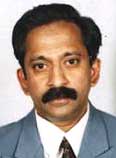 Chennai: S Sreenivasan, 40, chief financial officer, Bajaj Allianz General Insurance Company Limited, has reason to believe that the world is round. He started his career in 1986 as assistant manager, with the two-wheeler giant, Bajaj Auto in Pune before leaving to join Thermax DeVilbiss in 1988. In 1991 he left for Bahrain to join the National Insurance Group manager, finance and investments, and rose to assistant general manager. After a 12-year stint, Sreenivasan has returned to Pune in 2003 to rejoin the Bajaj group once again — but this time the group's non-life insurance venture.
According to him, managing funds in a life insurance company is a challenging task. "While one needs a long-term perspective, life insurance is mainly a combination of three operations — insurance, mutual funds (investment skills) and administration of long-term loans (collect premium over a long period and match assets and liabilities)." He adds, "The accountant should understand the actuarial science (statistical analysis to calculate insurance premiums) as well."
That doesn't mean that managing funds in a non-life insurance company is an easy task. The liabilities are short-term but the finance executive should have a long-term perspective and see that the investments yield better returns.
"At Bajaj Allianz General a large portion of our Rs500-crore investment kitty is parked in bonds and equity forms not more than five per cent of our investment portfolio." The duration of bonds, given the rising interest rates, is restricted to not more than four years. "Our target for investment income this year is Rs28 crore," he discloses. Excerpts from an interview :
Could you tell us about the company's business figures till August 2004?
Till the end of August 2004, we had booked a total premium of Rs327.4 crore logging 79 per cent growth over last year. For the corresponding period in the previous fiscal our total premium earnings were Rs183 crore. The underwriting profit for the period is Rs15 crore.
