labels: interviews
The flavour of changenews
Anita Sharan
23 September 1999

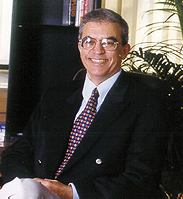
"India is still a glittering El Dorado. There are many myths among those mountains yet. They can put you in tough times; find you fighting your way through real numbers before you can make your boat float." That's Vijay Crishna's honest millennium reading for India. Mr Crishna is managing director, Godrej-GE Ltd. He talked to domain-B a little before GE decided to withdraw from the joint venture because it was not anywhere near establishing its brands in leadership positions in the Indian consumer durables marketplace.

Unlike a lot of crystal ball gazers who see major transformations happening in the country -- in the way businesses will be conducted, products sold, and in the way consumers will behave -- by the start of the next century, Mr Crishna sees this market as "still evolving". "There's a tough battle ahead yet, till it (the market) gets there," he says. "It's a bloodbath now and will get more bloody over the next two-to-three years."

Not that no change will take place. There will certainly be movement towards that stage of development that everybody is predicting. But that will not happen at a snap. "Where I'm coming from, as far as India is concerned, its still too early to tell. Apart from IT being the flavour of the month, it remains on the the horizon here. The Internet has huge potential -- it could be a game-changer in many directions, but my guess is while the rest of the world is looking at its real impact in two-to-three years, in India, it would take closer to five to 10 years."

But there are positive signs, he concedes. Like there being signs already of younger people in the government clearly seeing possibilities in IT and working at "moving it there. If there were more Andhra Pradeshes in this country, we could catch up in three-to-four years."

The other "flavour of the month" -- retailing -- doesn't exactly have Mr Crishna all charged up. "Retailing hasn't actually changed all that much. We're still stuck with the small retailer. Real estate is expensive. Yes, companies are getting in, but in a piddley sort of way.

"Three years ago, when Godrej applied for permission for a joint venture with Macro, it was turned down. Last year, Macro got approval for a 100 per cent set-up. There are some concrete hurdles -- setting up large retail outfits in city outskirts, for instance, needs people pouring in, buying volumes. You have to have numbers. We're still in the 'mom & pop' stage of retail. Actually, what we need is lower prices."

Yes, he agrees, there are pockets of development, but you have to have breakthrough points. "People with dash and bravado must be viewing opportunities, but they haven't panned out yet. If you take a comparison of China and India, they have some infrastructure in place by now -- we are a far cry from that. Of course, the excitement lies in the possibilities…"

And that's where the action will be, in chasing possibilities, Mr Crishna predicts. "Indian entrepreneurship, commercial instinct, may be second only to the Chinese. You'll find people leaping in, getting the timing right. The money's there, I don't worry about that. People are actually beginning to take the plunge, not waiting for the environment to change. They are willing to play close to the wind in order to make things happen. Look at corporate India: quite a few players live on the edge. But the winds of change are slow yet."

Entrepreneurship would also depend on whose money you are playing with. "The kind of money someone like Ashok Soota will be playing with, for instance, will not be from here." Mr Crishna believes that people in the marwari community will be the fastest in. "They know a good thing when they see one; I see them evolving the fastest. When things change, they'll be ahead of the curve -- they'll be able to put the money together and suss out opportunities to invest in."

However, he points out, these people will not be the builders of corporate India. Corporate builders are a different breed. "The Tatas, Godrej, Hindustan Lever, BPL, Mahindras and organisations like these, have their heart in corporate building. BPL's Mr Nambiar, of course, spans both sides of the spectrum."

Practically speaking, Mr Crishna believes that the action in the beginning of the next millennium will be driven by what has happened in the 90s. "Interesting things have happened. Corporate buccaneers have found it difficult maintaining their own pace after the licence raj. Those same people have had to consolidate, refocus, rethink, and go through entering a changed decade and emerging at the other end of the 90s. The Dhoots (Videocon) must probably be going through their own line of refocus."

So what will the early years of the next millennium really bring? "I see brand building happening at a much greater level of seriousness, around solid premises, in order to develop staying power. Brands that will come to mean to consumers what they did in the 50s, 60s and 70s. Consolidations, happening now, will see industry putting money into building good products. Already, we are seeing the gap closing between products made by Indian companies and products that come from outside."

And what would Mr Crishna wish will emerge in the early years of the next century? "Oh, I would wish the retailing scene would start changing significantly in the next two years. That would give consumers the real basis for choice. Such a change would see real choice being offered in a more solid way than through the realm of offers. For that, you have to have strong brands, good products." And good infrastructure, which is what finds our man talking a more realistic seven-to-10-year time frame possibly, rather than three-to-four years.

Who knows, though. Maybe the change in the right direction could happen faster. "A lot of political parties are talking the same things now, A stable government that can help in consolidation, consistency… that's really to be wished for."

The ultimate thing is: the changes are starting to roll out. Whatever time it takes, India can only move forward. And whenever the critical changes happen, moves that are being made today, albeit in a fragmented manner, will all come together. "We will come to a stage where there will be an information overload. This will demand a tremendous change in skills, and will affect how organisations will move that information forward. Consumers will play the driving role in purchase. That will drive focus too. The price for making mistakes will be much higher."

Finally, the core areas to start watching out for and making adjustments: "People. Processes. Personal cues. Pace.'' Mr Crishna believes he's said enough. For now.


 search domain-b
  go
 
The flavour of change