|
Iconoclastic poet and writer Kamala Surayya, better known by her earlier name of Kamala Das died in the early hours of Sunday. She was 75. Das was brought to Pune from Kerala six weeks ago by her youngest of thre sons Jayasuriya and admitted to the Jehangir Hospital. Doctors said she had diabetes and was suffering from pulmonary infection and a respiratory disorder. Known for her unconventional poems celebrating teenage rebellion and frank exploration of female sexuality, Das is known as one of the pioneers of Indian English poetry. Intense, melancholic and sensuous by turns, in Das's memorable words, poetry was like "the April sun squeezed like an orange juice", as one critic put it. Stalwarts of English and Malyalam literature on Sunday agreed that Kamla Surayya's contribution to literature was immense and duly recognised. Prime Minister Manmohan Singh on Sunday expressed grief at the demise of Surayya, and praised her poems "focusing on womanhood and feminism" for sensitivity. "Her achievements extended well beyond her verses of poetry. She made a mark in painting and fiction. As a syndicated columnist, her columns touched on everything from women's issues and child care to politics," the prime minister said in his condolence message. He singled out some of her poems, including The Descendants and Only the Soul Knows How to Sing, for praise, stating they were widely read and admired for their human sensitivity. He expressed his sincere condolences to the bereaved members of her family and "thousands of her readers and admirers". "I heard the news in the morning and was devastated. I agree that it was expected, but then nobody wants to lose someone so dear," Manacad Matthew, editor in-charge of the Manorama group, told DNA. "I have been with her for a long time. My profession got me to share a very friendly and open relationship with her." Das, who was born in a conservative Hindu Nair family with royal roots, was in the news in 1999 when after the pasing a2way of her husband she embraced Islam at the age of 65, assuming the name Kamala Surayya.
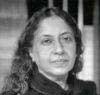
Recalling how he called her chechi, which means elder sister, Matthew said, ''People wonder and ridicule her for converting. But she had an interesting story to that. A widow in Hindu culture had to go through a lot, right from tonsuring her head to being considered inauspicious. She converted for her well-being; she was not wrong." Surayya was born on 31 March, 1934, in a family of writers - her father, V M Nair, was the editor of a widely read Malayalam newspaper and mother Nalapat Balamani Amma was a well-known poet. Surayya spent most of her childhood in Kolkata where her father worked as managing diector of auto firm Walton. Influenced by her poetess mother and uncle Nalappatt Narayana Menon, a prominent writer, Kamala started writing at the age of 17 under the pen name Madhavikutty. She married Reserve Bank's Madhava Das who later rose to be executive director of RBI. Her husband was 15 years elder to her, and the couple had three sons. Her eldest son, M D Nalapat, is a journalist, Chinen Das a senior manager with the Times Group and Jayasuriya, a private sector executive. Among Das's works in English are Summer in Calcutta (1965), My Story, for which she will be best remembered (1976), The Old Playhouse and Other Poems (1973) and Alphabet Of Lust (1977). Friends and close associates of the writer converged at Jehangir Hospital, where she had been under treatment for chronic obstructive pulmonary disease (COPD) for over a month, on hearing the news. Her body was embalmed at the Sassoon General Hospital. Das's body has been taken to Mumbai and will be flown to Kerala on Monday morning. Her body will be taken through five districts for people to pay homage: the Kerala government has declared Monday a state holiday. Jayasuriya said her last rites would be performed with full state honours later in the day. People associated with a few Malayali organisations were also present at the time of shifting the body to Mumbai in a van. Her maid-attendant Ammu, who was with Das in her final days, was also present. She wrote in English and her native Malayalam, and will be remembered for never shying away in her writings by boldly expressing herself as much from her warm heart as from her questioning mind.
|