|
Colour has a very strong role to play in our lives. Our taste in colours is determined by a variety of influences, often reaching back into our childhood. It is said that colour has the power to affect your moods. Whether you agree that colours have this metaphysical property or not, it is true that some colours are warm while others like blues and greens fall into the cool end of the spectrum. While it is not very difficult to choose your wardrobe depending on your personal preferences and prevailing fashion trends, choosing the colours for a house can be quite a different experience. Adding colour to your home can be done in a many different ways. Painting your home is probably the first thing that comes to mind. It is also the most time-consuming, but the least expensive of the options. Paint is versatile in that it can help create illusions of space; lighter colours tend to give an impression of making the room bigger and more open than it is, while painting your ceiling a darker shade than your walls can make a large room seem cosier. It is common enough to see people going to a paint store and coming back looking totally confused. The consumer is bombarded with a variety of shade cards, each with its own incomprehensible name, some of which seem to have no connection to the shade it is referring to. You know that peach is a fruit and not a colour, but what are you going to do when the salesman gives you a shade card ‘Peach’ and you find yourself looking at six different shades of orange? While it is tempting to go by what interior designers proclaim as the current ‘colour trend’, keep in mind that trends change every season. Unless you have the time, the energy and the money to paint your house every time the fashion pundits declare a new colour to be ‘in’ season, you are going to have to live with the colour until the next paint job a few years down the line. Choosing the colour for your walls is not as easy as the ‘Mera wala Blue’ advertisement of a major paint company. ‘Mera wala Blue’, yellow, or red, may be your favourite colour but can you live with it on your walls? Experts often counsel painting a 4’ by 4’ square on the wall and living with it for 24 – 48 hours before finalizing on that as your wall colour. This is because the effect of the colour changes with the changes in ambient light. You also need to pause and take into account the size of the room, the amount of sunlight it gets during the day, the use of the space, the lighting, and the mood you hope to achieve, the colour of your furniture and the accessories you use to decorate the room. Again, while you may have many definitive ideas about the colour scheme of your house, it is important that you desist from trying them all out at the same time. It is okay if shutting doors can separate the rooms, but imagine the riot of colours when all the doors are open. Most interior decorators would agree that there are three ways in which to use colour – tonal, harmonious or complementary. Using tonal colours is to use the same colour in varying tones throughout the home. When you use colours that are near each other on the colour wheel, you get a harmonious look that is very easy to live with. Complementary colours are those that are opposite each other on the colour wheel. The use of complementary colours leaves more impact, and takes a great deal of courage to try out. 
Most of us are cowards when it comes to using colour. We look and appreciate the colour palette that the more artistic amongst us are willing to experiment with, but when it comes to our own homes, we often stick to the tried and trusted. And so, boring beiges, sober blues, greens, and neutral shades cover our walls. If we ever venture to try another shade, we will choose the lightest shade of that colour that we can find. If you want to experiment with bolder colours, yet are afraid to take the plunge, then try dipping your toes by using a dark shade in one room – the bathroom, for instance. Or the hallway. Or else, paint one wall in a room in the darkest shade on the shade card, and use the lightest shade to colour the other walls. Again, pick one accent colour from your furnishings or artwork, and paint the room around it. Or, paint the inside of an open shelf a dark, vivid colour that will display your collection of crystal or bronzes. You will be surprised at the difference this can make. 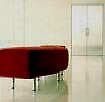
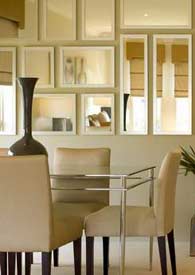
If this still seems too daunting, there is an easier way out. Use a neutral colour palette for the walls, and layer it with rich, colourful furnishings. Used judiciously, even the brightest of colours will not overwhelm the neutrals. Think of pearl grey walls with russet or burnt orange window drapes, pale cream walls offset by warm brown upholstery and rich earth tone cushions, the impact of pastel walls improved by a darker accent wall, boring beige livened up with jewel red lampshades. Use a colourful carpet as a focal point of the room. Add a well-chosen accent piece that will command attention against a neutral background. Accessories are an ideal way to pull a room together. Use as many or as few cushions, pillows, rugs, flowers, table and bed linen as you like to create a space that is yours. Use hand painted screens as room dividers. Ceiling fans come in a variety of colours if you want to jazz up the ceiling. Lighting is another way to add a quick dose of colour. Coloured chandeliers or lampshades can complement your walls. Coloured tiles and backsplashes in the kitchen and bathrooms are a great way to add a touch of colour. Strategically placed houseplants can add more than a tinge of green to your rooms. They bring warmth and life to the room décor. Experiment with colour to change your house into a comfortable home. The best part of this exercise is that you can change the accents around to update your home when trends change.
|


