Venezuelan troops seize Cemex cement plant
19 August 2008
Venezuelan troops today seized control of Mexican cement giant Cemex's plants and offices in Venezuela as workers in the factory cheered and waved in approval, and handed over operational control to Petroleos de Venezuela S.A.to run on behalf of the government.
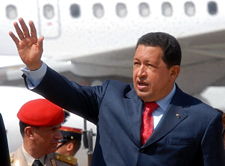 According to early reports quoting television channels in the region, Venezuelan President Hugo Chavez, accompanied by energy minister Rafael Ramirez, and president of the state owned oil company Petroleos de Venezuela S.A. (PDVSA), are reported to have been present during the operation.
This move came after both sides failed to reach a deal in cement nationalisation talks. Cemex which accounts for half of Venezuela's total cement production had sought $1.3 billion compensation for relinquishing control of its Venezuelan operations, which the government thought was too high. In 2007, its Venezuelan operations contributed 4 per cent of Cemex's total earnings before interest, tax, depreciation and amortisation.
Now Cemex will have to settle for a deal considerably lower than the $1.3 billion it had sought. Earlier this month the Venezuelan government had issued Cemex with a tax bill of $37 million as the takeover talks hit rough weather.
If a reasonable compensation is given to Cemex then some analysts see a silver lining in the takeover as it would reduce Cemex's $19-billion debt that rose last year after its biggest takeover deal in which it bought Australian rival Rinker.
Earlier as part of the cement industry nationalisation, Venezuela struck deals to buy majority shares in the local operations of European cement makers Holcim and Lafarge after a decree in June giving them 60 days to negotiate handover agreements that would give at least a 60-per-cent controlling share of each firm to the government, in a pattern that usually compensated takeover targets well.
