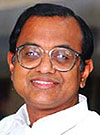
| Finance minister P Chidambaram has finally taken a giant leap towards simplifying taxes as he announced the white paper on value added tax (VAT) this week. VAT puts an end to the maze of multiple taxation and brings down the amount of taxes for manufacturers and traders and thus lowers the prices of goods for the consumer.
As a result, the overall tax burden will be rationalised and prices, in general, are expected to fall, the tax base will widen inducing better compliance and, thus, will net more revenues. VAT will make the tax structure simpler and more transparent, in short, an all round win-win proposal. The economy will work on a federal structure. Till now each state had a virtual sovereign status in matters of its taxes - a throwback to the erstwhile princely states, which could impose what taxes they pleased - which elected state governments retained as a viable revenue model. With VAT's uniform structure it should be possible to cut cumbersome paper work by computerising records, a step that would usher in transparency in tax accounting. Expectedly, traders are not particularly delighted about it, though they claim it would impose more paper work and administrative burdens. The Federation of Indian Chambers of Commerce and Industry said that while the move will end multiplicity in taxation, it would have been advisable to abolish other local taxes instead of levying VAT on them. Traders will meet later this month to discuss what action to take. In line with the policy of not taxing exports, units located in special economic zones and export-oriented units will be exempted from VAT. The white paper on VAT released by the FM mentions that, in case exemption is not possible, refund will be provided within three months. India Inc. says that VAT will also boost healthy competition by making the tax structure uniform. | What the chambers say FICCI: Abolish all local taxes, including octroi and entry tax instead of merging them into VAT. ASSOCHAM: Move to keep around 270 products of basic necessity such as drugs and farm produce in the 4 per cent VAT category welcome. PHDCCI: VAT will improve the competitiveness of local industry, both in Indian and international markets. CAIT: Since most items are in the 12.5 per cent tax slab compared with the current 8 per cent, the move will lead to a jump in inflation. FIEO: Exporters should not be forced to block their money by paying VAT and waiting for refund, the step will call in corruption. | Currently only a small fraction of India's 1 billion population pays income tax. Over 550 items will be covered under new tax regime, of which 46 natural and unprocessed local products would be exempt from VAT. Commentators are optimistic that VAT will help increase revenues by getting more people in the tax net. Haryana, was the only state, which introduced VAT last year, actually improved its revenues, disproving fears that it might result in lower revenues. However, VAT will be a major blow to tax-evaders - manufacturers who evade excise duty and traders who evade sales tax. VAT provides for input tax credit to be given to manufacturers and traders for purchasing their inputs and supplies meant for both sales within the states as well as to other states. This will lead to improved inter-state sales.
VAT prescribes a tax rate of 4 per cent on a range of 270 items, including industrial products and 12.5 per cent on the others. The lower rate of 4 per cent will be levied on key products such as medicines and drugs, agricultural and industrial goods. The 12.5 per cent rate will be applied to the rest of the goods sold within the country. The 46 natural and unprocessed local products include petrol, diesel, aviation turbine fuel, liquor and lottery tickets. While input tax is levied at 4 per cent, the output tax will be 10 per cent. This means, for intermediary goods the VAT levied will be 4 per cent and for the final product it would be 10 per cent. Considering difficulties faced by the tea industry, it was decided that tea-producing states would be given an option to levy 12.5 per cent or 4 per cent, subject to review in 2006. Precious metals like gold and bullion would be taxed at 1 per cent . Three items - sugar, textile, tobacco - under additional excise duties will not come under the VAT regime for one year and, instead, the existing arrangement would continue. "We have formed a rainbow coalition to undertake one of the biggest tax reforms since Independence," said Chidambaram, releasing an 18-page paper of the Empowered Committee on VAT. The move to implement VAT has been postponed five times in the past as several state governments had expressed concerns about losing revenues. The new UPA government, which came to power at the Centre last May, had vowed to implement VAT within its term. VAT will be implemented from April 1, 2005. Following opposition from some states, it was decided that states would have option to either levy 4 per cent on food grains or totally exempt them from VAT, which would be reviewed after one year.
also see : How
does VAT work?
|