|
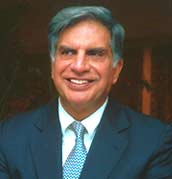
Mumbai: Tata Steel along with Corus has realised synergy benefits of $76 million in fiscal 2008, chairman Ratan Tata said in the company's annual report for 2007-08. He said Tata Steel – currently the sixth largest steel producer in the world - has reaped manufacturing gains while Corus has benefited from lower taxes, shared service and corporate governance. ''Tata Steel has derived the benefits in the area of manufacturing, whereas in Corus, the benefits are from reduction of taxation and in shared services in the area of legal, investor relations etc, in the corporate centre,'' Tata said. A joint integration teams of the two entities have identified synergies worth $450 million and has drawn up action plan to realise this by the end of March 2010, he said. The Tata Steel Group, that now includes Corus, is committed to investing in leading edge technology, process innovation and product development and has targeted return on its existing investment of 30 per cent against the current 19 per cent over the next five years, said Jean-Sebastien Jacques, group director (strategy), Tata Steel. The group is looking at further downstream and upstream integration aimed at achieving 100 per cent raw material self-sufficiency in India and around 50 per cent self-sufficiency in Europe, he said. Tata Steel is planning to double its borrowing capacity to part-finance its future projects that include both expansions and new projects. At its 101st AGM due on 28 August, the steel maker will seek shareholder approval to increase the borrowing ceiling from Rs20,000 crore to Rs40,000 crore in a bid to raise funds for financing its future projects in the brownfield and greenfield projects. The company plans to increase capacity at its Jamshedpur facility by 7 million tonnes and has already procured equipment worth Rs6,000 crore for the proposed 6 million tonne steel plant at Kalinga Nagar in Orissa. In May this year, it raised Rs2,000 crore, including a green shoe option, through a private placement of redeemable non-convertible debentures (NCDs), as part of a long-term financing plan. In November 2007 the company came out with a Rs10,000-crore rights issue to repay the bridge loans raised for funding of its $13-billion Corus acquisition, by issuing 12.18 crore shares of Rs300 each to be issued on rights basis in the ratio of 1:5 and cumulative compulsory preference shares (CCPS) of Rs100 to be converted into equity on 1 September 2009. (See: Tata Steel's Rs10,000 crore rights issue to open on November 22) Earlier this month, the company set up Tata Steel Global, the Singapore-based holding company for all its overseas assets (See:Tata Steel sets up overseas holding arm in Singapore; plans to raise funds for acquisitions). All the future financing for overseas assets will be done through the new holding company. It will comprise Corus Plc, which Tata acquired last year, NatSteel (the Singapore company acquired by Tata Steel), Tata Steel Thailand and Mineral Holdings, comprising the mines acquired in Ivory Coast and Mozambique. Tata Steel had last year bought a 35-per cent stake in a Mozambique coal mine for about $88 million and is looking at various options globally for iron ore as well. Finance for the Corus acquisition was raised through bridge loans and later refinanced by Tata Steel which has led to a dramatic increase in the interest outflow; in the April-June quarter the interest outflow was Rs241.7 crore compared to Rs41.6 crore for the same quarter last year. Koushik Chatterjee, chief financial officer, Tata Steel, disclosed that the company had already formalised plans to raise Rs10,000 crore ($235 million) in debt as part of a Rs12,000 crore expansion in India. Nearly half of the planned investment, which will add three million tonne capacity, is being generated internally. While Tata Steel's own raw material requirements for its 5-million tpa, capacity in India have been secured locally, Corus is depndent on imported ore and coal to produce 18 million tpa. To meet this Tata Steel has been acquiring stakes in coal mines in Mozambique and in Australia and stakes in an iron ore mine in Ivory Coast, which it would like to supplement with further acquisitions of raw material sources. In order to double its return on investment in Corus, Tata Steel may hike off some of the low-profit yielding assets of Corus. Tata Steel has set an ambitious hiked target for ROI at 30 per cent from the current 19 per cent over the next five years from its current assets, a tough task as ore prices have been rising incessantly with global mining giants BHP Billiton and Rio Tinto having nearly doubled their prices in the last one year. (See: Rio hikes iron ore contract prices for Asian steel mills by 97 per cent) Tata Steel group director (strategy) Jean-Sebastien Jacques said in the company's latest annual report, ''The group will pursue the optimisation of its European assets, dispose and restructure assets that are of low profitability and pursue differentiation of products and services." Besides Corus, its largest overseas acquisition, Tata Steel owns Tata Steel Thailand and NatSteel Asia. It is setting up a ferrochrome unit in South Africa and has signed a memorandum of understanding (MoU) with the Vietnam government for setting up a 4.5 million tonne per annum steel plant.
|