|
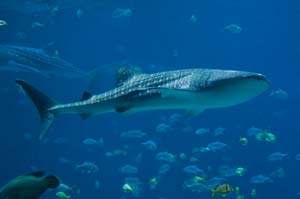
Tata Chemicals Ltd (TCL) has joined hands with the National Institute of Oceanography, the Gujarat forest department an the Wildlife Trust of India for research on whale shark and coral reef. Funded by Tata Chemicals, with a corpus of Rs 2 crore, the conservation project will also involve other marine experts from the national and international arena, TCL said in a release. Tata Chemicals and WTI today signed an MoU for a conservation project that will create awareness and undertake research, to save the endangered species of whale shark that visits the coastal shores of Gujarat. The Gujarat forest department and Wildlife Trust of India (WTI) entered into a memorandum of understanding for a conservation research programme on whale sharks and corals. The project will study the whale shark habitat, map their migration process and various aspects of its life cycle and their genetic patterns and estimate the population and document the results for effective and efficient protection. The research on corals will include study of coral diversity, mapping, habitat, threats, and experiments for coral transplanting. The research inputs on coral will feed scientific information to the proposed interpretation center at Dwarka / Mithapur and a major initiative in coral transplanting, the release said. The study will also explore whale shark tourism opportunities in the region, making the project unique and first of its kind in the country. ''We at Tata Chemicals have been committed to the preservation of the environment together with well being of the local communities that we are engaged with. This initiative is our first step taking the conservation efforts to a cause that is important globally and to understand through scientific research this rare species of fish whose numbers are dwindling. Creating awareness that this unique species frequents the shores of Gujarat could create opportunities in tourism for the state,'' Homi Khusrokhan, managing director, Tata Chemicals, said. The Gujarat forest department has granted financial compensation to fishermen (as their nets get damaged during the release of whale sharks accidentally caught). The forest department has also declared Kartik Amas as Gujarat's Whale Shark Day, an honour no other species, not even the tiger, has in this country. This year the Whale Shark Day – 'Vhali Divas' is being celebrated on 27 November in Porbandar, the release said. "Normally it takes around 10 years for the conservation initiative of a commercially exploited species to succeed, but we have managed to get positive results in just four years, on the strength of the concept of the campaign,'' said Vivek Menon, executive director, Wildlife Trust of India. ''Spiritual ambassador Morari Bapu's endorsement connected emotionally to the traditional and cultural ethics of the locals and fishing communities has generated an overwhelming response across the target groups. Moreover, the effect of the campaign was consistently and professionally surveyed to measure its outcome and today all of us finally hope that the whale sharks in India are in safe waters," he added. Till date, around 75 whale sharks have been released by the Gujarat Forest Department. The rescue and release of accidentally trapped whale sharks is one of the largest rescue efforts of its kind in the world with the department officials making a physical assessment of every reported rescue. ''This is a beginning of a major conservation initiative with public-private partnership. Gujarat has a tradition of conservation and it is apt that various sections of societies formalise the arrangement for greater success. The government is committed to the cause of conservation. My belief is reinforced by the initiative shown by the community in the rescue data of the whale shark release and the pivotal role played by the forest department, WTI, TCL and the coast guard,'' said SK Nanda, principal secretary, forest and environment. ''The Saurashtra coast is a preferred destination of whale shark because of its ecological health. This largest fish has been visiting the region unabated since ages; now that protection is formally extended the whale shark will find it friendlier. I am sure the research inputs will pave way for whale shark tourism extending benefit to local people,'' he added. ''We along with the Wildlife Trust of India and Tata Chemicals have successfully worked on the whale shark conservation project for over three years. We are now looking at filling the gap in information on whale sharks and corals. The community, which has sacrificed so much for the conservation of whale sharks, will get benefits from its conservation. Coral, another field of wildlife conservation, is less explored and needs significant scientific inputs for conservation. I hope that the interest shown by Wildlife Trust of India (WTI) and National Institute of Oceanography (NIO) with the support from Tata Chemicals will provide vital inputs for long term conservation of whale sharks and corals in the region,'' said Pradeep Khanna, principal chief conservator of forests and chief wildlife warden, Gujarat Forest Department. The conservation programme, is the first of its kind to pave way for voluntary conservation at this scale. The fishing community has willingly agreed to sacrifice its economic gain and has displayed exemplary sense of responsibility to the marine environment in which they live. The government has also come forward to provide relief for the loss of net to the extent of Rs25,000 and WTI has worked as a catalyst with TCL actively supporting the cause. The Coast Guard too has joined the programme both as motivator of community and also in keeping vigil. The whale shark conservation campaign (initiated in January 2004) and the Mithapur coral reef securement project; two of the largest corporate supported conservation initiatives in India, are aimed at creating a conducive environment for the well being and breeding of marine life species in the coastal belt of the country and serve as a global role model to conserve these endangered habitats. The campaign is also aimed to spread awareness, educate and change perceptions about the world's largest fish, protected by law - yet hunted. A decade ago, the whale sharks were brutally hunted in hundreds, along the Gujarat coast, for its liver oil to waterproof boats and also for its meat, which was exported. On May 28, 2001, whale shark hunting was banned in India, following it being listed under Schedule I of the Wildlife (Protection) Act, 1972, which was triggered by the documentary `Shores of Silence' by Mike Pandey. Prior to this, few people, other than the fishermen who hunted it, ever knew that whale sharks existed in Gujarat waters.
|