|
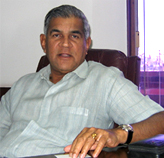
V Jagannathan talks to Suresh Krishna, CMD, Sundram Fasteners Limited on the company's new JV with Bleistahl Producktions Gmbh & Co. "We are certainly on an expansion mode," declares Suresh Krishna, chairman and managing director, Sundram Fasteners Limited. In 1999 Sundram Fasteners acquired Autolec Industries Limited, which manufactures automobile pumps. It was later followed by the acquisition of Cramlington Precision Forge Limited, UK, from Dana Spicer for $2.64 million (Rs11.6 crore) and setting up a plant in China through a subsidiary Sundram Fasteners (Zhejiang) Limited with an investment of $5 million (Rs22 crore). While the Chinese subsidiary commenced operations this May, Krishna says Cramlington Precision Forge is expanding its product basket. The unit makes precision forged gears and components for medium and heavy trucks. With these acquisitions Sundram Fasteners is no more a manufacturer of nuts and bolts. Reinforcing the image is the company's latest move. The Rs689-crore-turnover company has floated Sundram Bleistahl Private Limited, a 74:26 joint venture with the German automobile valve train parts manufacturer, Bleistahl Producktions Gmbh & Co. The Euro55-million revenue Bleistahl is the second largest producer of valve train parts in the world and commands a global market share of 20 per cent just behind the market, leader Federal Mogul. What has surprised industry watchers is Krishna having opted for a joint venture. For decades he didn't believe in partnerships, especially with a foreign company, since they rarely added value to the Indian outfit. "We hold 74 per cent of the Rs10-crore equity of the joint venture company. Moreover, the new company is a sort of plug-in in our scheme of things. We decided to be flexible this time," he justifies. Krishna, this time, has resorted to his old strategy of bringing in an overseas production line to India. According to the agreement between the two companies, Bleistahl will ship its valve train parts production lines in a phased manner to India.
Even earlier in 1992 Krishna had brought the radiator cap production line of General Motors to India, which had hit the headlines. "It is difficult to bring a production line to India. But once that happens nobody gets out," he says. However, officials of the two companies declined to divulge any figures. The joint venture, a 100 per cent export oriented unit, is likely to be set up in Hosur at an initial investment of Rs21 crore. Further investments will be added as and when production lines are added. Apart from the equity, the company will raise the remaining Rs11 crore through debt. "The total investments for the new company is expected to be Rs145 crore over a period of five years," Krishna adds. As the plant is only around six years old, no major expenditure is expected to recondition it. Planned to commence commercial production in the second quarter of next fiscal Sundram Bleistahl will begin by shiping its production to the German company and its clients directly. Eventually, the company will look at the domestic market for which a royalty of three per cent on domestic sales will be paid to Bleistahl. According to Krishna, the German company generates around Euro45 million in Europe and the value of business expected to be transferred to the Indian joint venture over a period of time will grow to around Euro 25 million. Moreover, the production process for manufacturing valve train parts is similar to manufacturing sintered metal parts. Initially, however, Krishna says Sundram Bleistahl will earn around Euro5 million stamping 35 million pieces per year. "We hope the new company will be profitable from the first year onwards." Apart from auto components, the company is also expected to supply dyes and other toolings to Bleistahl. On its part, the German company will send special alloy metals like copper, nickel and cobalt, to the Indian joint venture. With outsourcing having become a controversial issue globally, Bleistahl's CEO, Charles Robert Sullivan, emphasises that there will be no job losses in Germany. The Indian joint venture will begin by employing 45 employees compared to 275 workers in Germany, 205 in Brazil, 100 in South Africa and 55 in China. But why did Bleistahl opt for India instead of China, known for its low-cost production base, where it already has a joint venture? Replies Sullivan, "The location choice is more to do with Sundram Fasteners, given its efficient production processes." While the two companies decline to quantify the cost savings that Bliestahl would derive, all that Krishna is willing to say is that the savings will be in the form of labour, logistics, tool making and other overheads. The shifting of production lines to India does not imply that Bleistahl plans to exit manufacturing in the parent country. On the contrary, the focus in Germany will be on high value products. According to Sullivan the global original equipment manufacturer's (OEM) market size for the company's products is around Euro275 million. "We are not in the replacement market." In Europe, Bleistahl is an OEM supplier to auto makers Volkswagen, Peugeot, BMW and Honda. Agreeing that European manufacturers were facing stagnant market shares, Sullivan says Bleistahl has increased its supplies to Kia and others. The tie-up with Sundram Fasteners may get Bliestahl an entry into the American auto industry; not many are aware that Sundram Fasteners is one of the largest exporters to the US. This fiscal it expects to earn Rs200 crore from exports. In the first half of FY 2004-05, the company had already earned Rs122 crore from exports on a turnover of Rs486.31 crore. However, increased input prices, an exchange loss of Rs9.09 crore and increased depreciation affected the profit after tax marginally to Rs26.34 crore from Rs27.76 crore during the first half of the previous fiscal. The company is credited with having virtually pioneered the total productive maintenance (TPM) movement in India. Surprisingly, with other group companies winning Deming awards, Sundram Fasteners has made no attempt to get this award. "I follow a religion called TPM, which like TQM (total quality management) aims to arrive at the same goal," explains Krishna and adds, "I am happy and satisfied with my path."
|