labels: M&A, Management - general, Electronics - consumer, Brand Dossier, Advertising / branding
Philips hands over N. American LCD TV production to Japan's Funai news
Our Corporate Bureau
09 April 2008

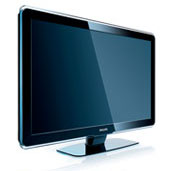
Philips Eco Flat TVRoyal Philips Electronics, the Netherlands-based consumer electronics giant, has decided to stop making TVs for the US and Canadian markets. It has agreed to let Funai Electric Co. of Japan to acquire the North American rights to its liquid crystal display television division, giving the Japanese company control of the Philips and Magnavox brands.

Under the five-year agreement between the two groups (taking effect from 1 September 2008), Philips will receive royalty payments against the sales of these brands in the United States and Canada. Funai will have exclusive rights to the Philips and Magnavox brand names for its consumer television offerings in these markets.

Philips sells other consumer products in the US, including DVD players, audio video equipment and accessories, health care, electric razor products and lighting. These products are not covered by this agreement.

Funai, which currently markets its products under the Emerson, Sylvania and Symphonic brands, has a 3 per cent share of the $22.4-billion North American LCD TV market; Philips has 6 per cent (worth $1.7 billion in 2007). With a combined 9 per cent of the market, Funai is likely to be in a better position to compete with rivals Sony of Japan and Korea's Samsung Electronics.

Philips' problem has been that it does not command a premium in the flat-panel LCD TV market in the US, unlike Sony and Samsung. This is unlike in Europe, where it is seen as a top brand.

This has made it difficult for the Dutch company to make two ends meet as flat panel TV prices continue to fall. There are cheaper brands available, with which it is unable to compete on price. Philips share of the LCD T V market in North America has slumped from 17 per cent a year earlier.

What's worse, the average selling price for a 42-inch LCD TV has fallen by around 26 per cent. There is a squeeze on profit margins. This is where Funai's lower-cost operations come in.

Funai Electric Co. Ltd., established in 1961, is headquartered in Osaka, Japan, and is listed on the Tokyo Securities Exchange First Section. Besides It is a major original equipment manufacturer (OEM) supplier for appliance, consumer electronic, computer, and computer peripheral companies on a global basis.

Besides its manufacturing base in Japan, Funai has four plants in China and one each in Hong Kong, Thailand and Poland. It also has an alliance with the Japan Victor of Company, (JVC), under an agreement hammered out in January 2008, under which the two Japanese companies will draw from each other's strengths.

JVC president Kunihiko Sato believes that his company has advantages as the technology to produce and manage high quality pictures, its production base in Mexico, presence in the European market, and its strengths in large screen products. He says Funai has these advantages: competitiveness in cost and mass production, production base in Eastern Europe, presence in the US market, and strengths in small and mid-size screens.

The collaboration between JVC and Funai will include production sharing, joint development and other areas of cooperation, including in logistics. These, according to JVC president Kunihiko Sato, will result in a reduction of production costs, saving time and cost of R&D, and widening of the product range.

Under the agreement with Philips, Funai will source, distribute, market and sell Philips and Magnavox LCD TVs in North America, and manage customer service too. Philips will design, manufacture, and market televisions in the rest of the world and also oversee Funai's marketing in America.

Philips' decision to hand over the North American LCD TV business to Funai is in line with the overall commoditisation of manufacturing. The Dutch company is not the only one to withdraw from this business. In 2003 Thomson SA of France sold its RCA television brand to China's TCL. More recently, Japan's Pioneer decided to exit production of plasma panels, which it will procure from others.

Profits in the display business, which only a decade ago seemed promising, has already turned flat. Philips has recently reduced its stake in its joint venture with Korea's LG to 13.2 per cent, and the company has been renamed LG Display (See: Philips selling its share worth $1 billion in LG Display)

Philips said it taking a $196 million charge in 2008 to cover restructuring in its TV business.


 search domain-b
  go
 
Philips hands over N. American LCD TV production to Japan's Funai